£17,000
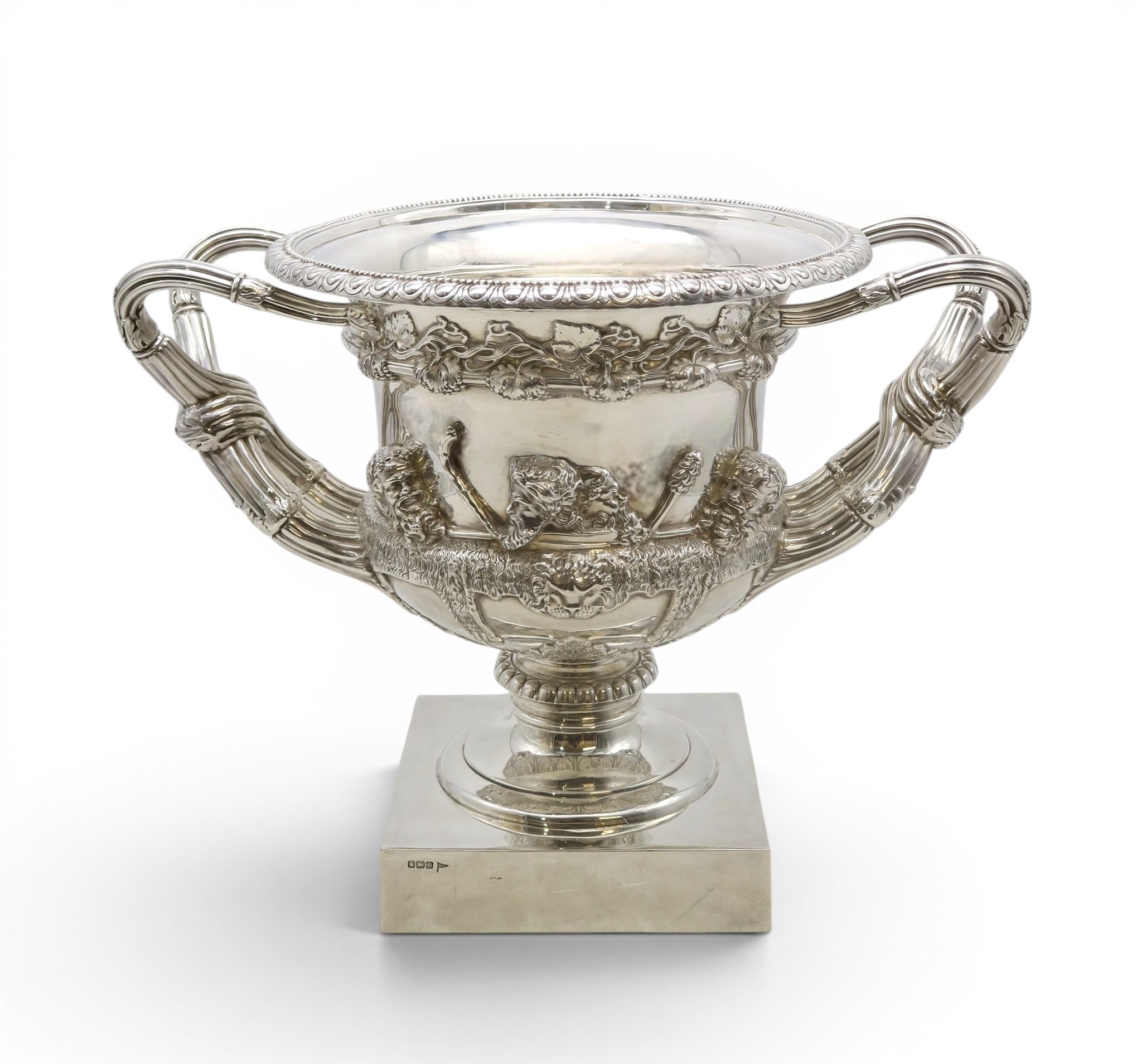
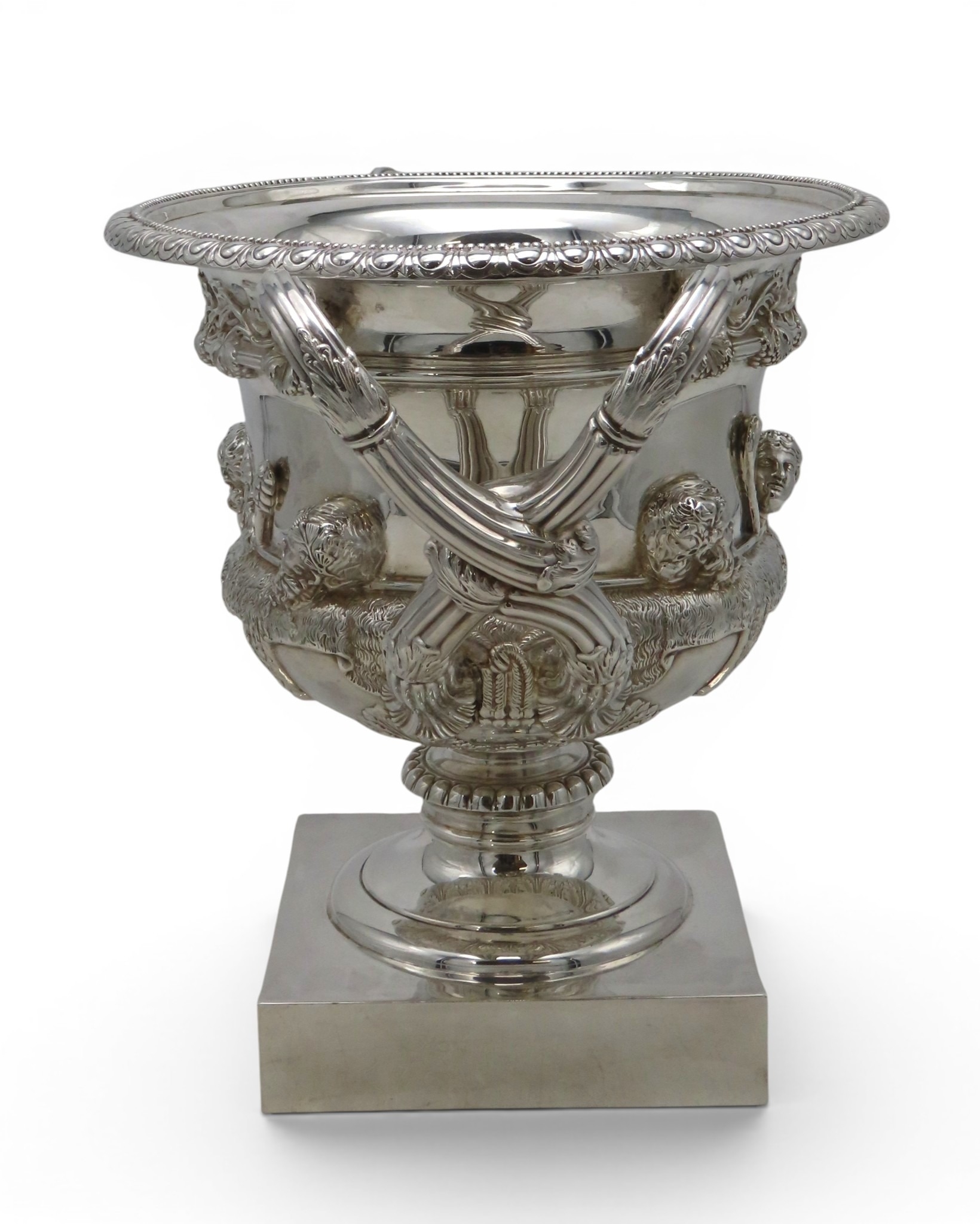
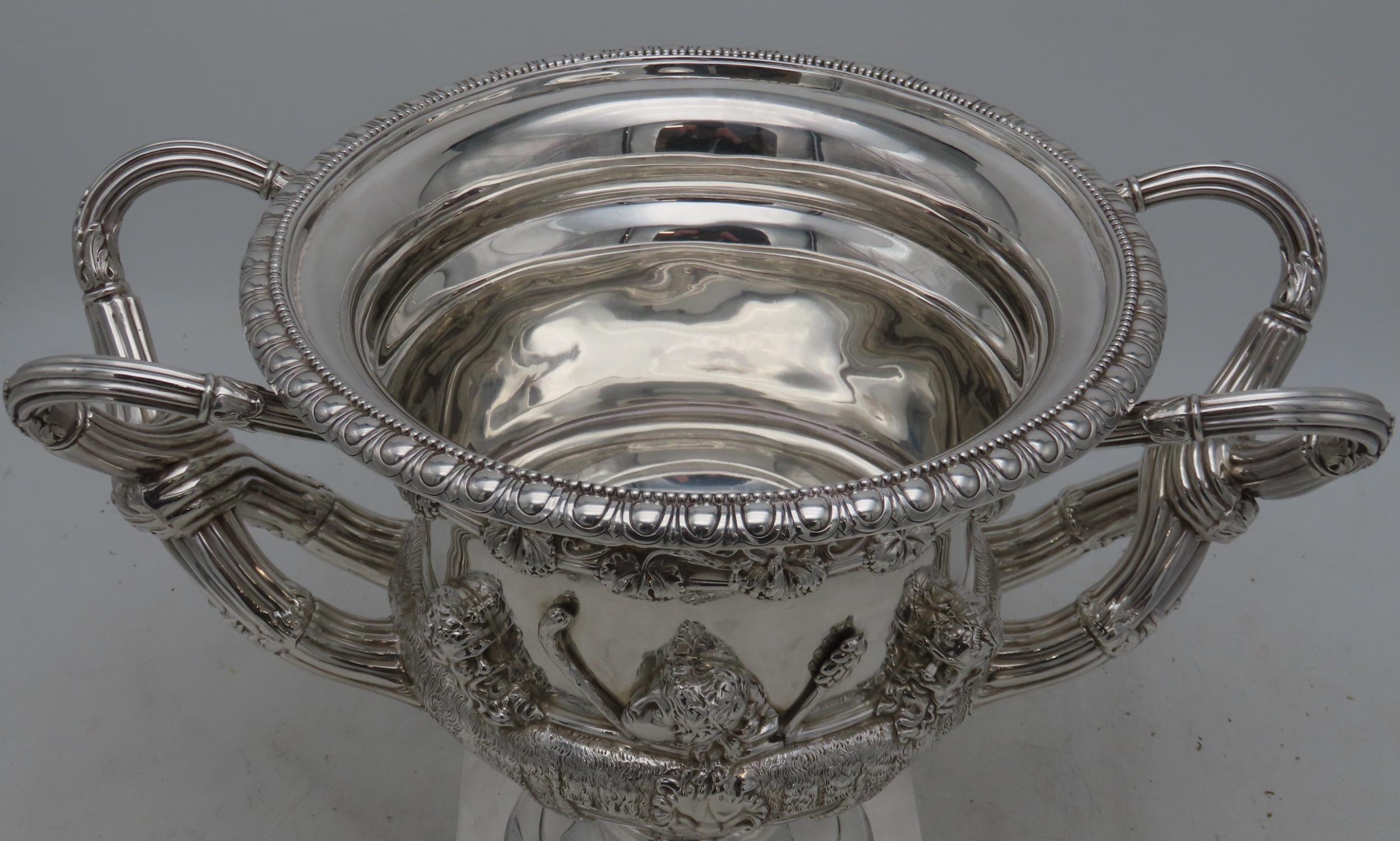
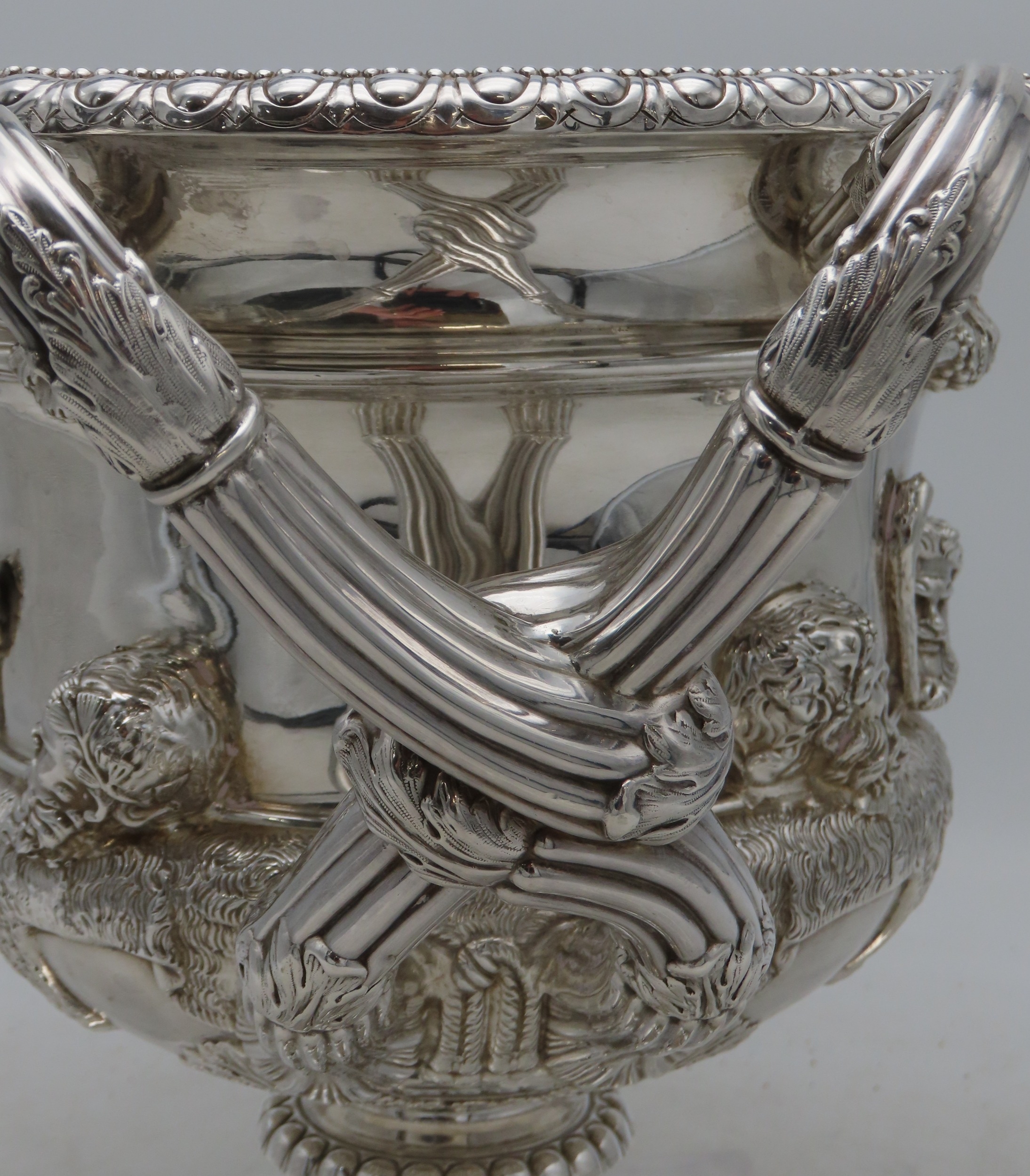
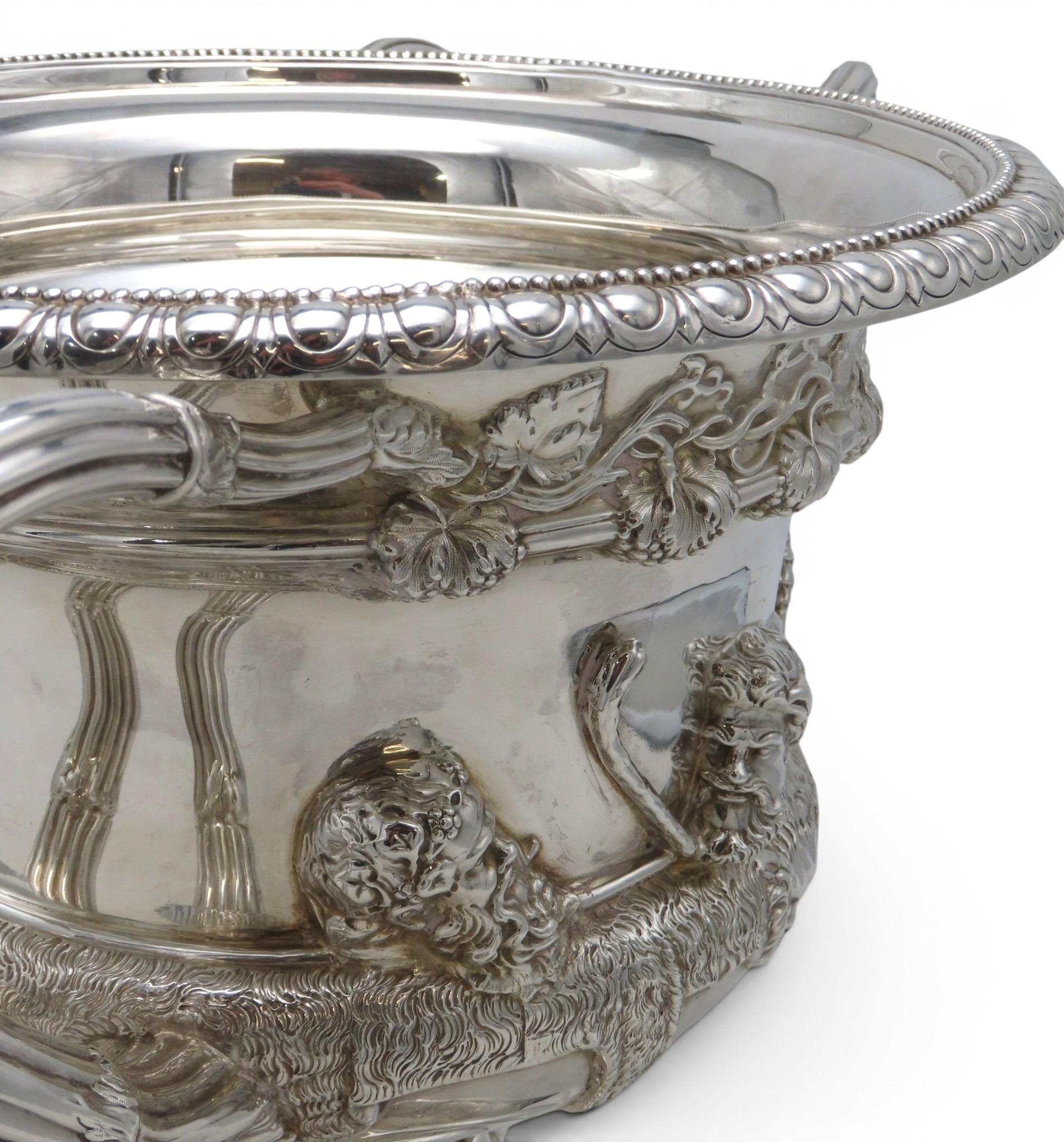
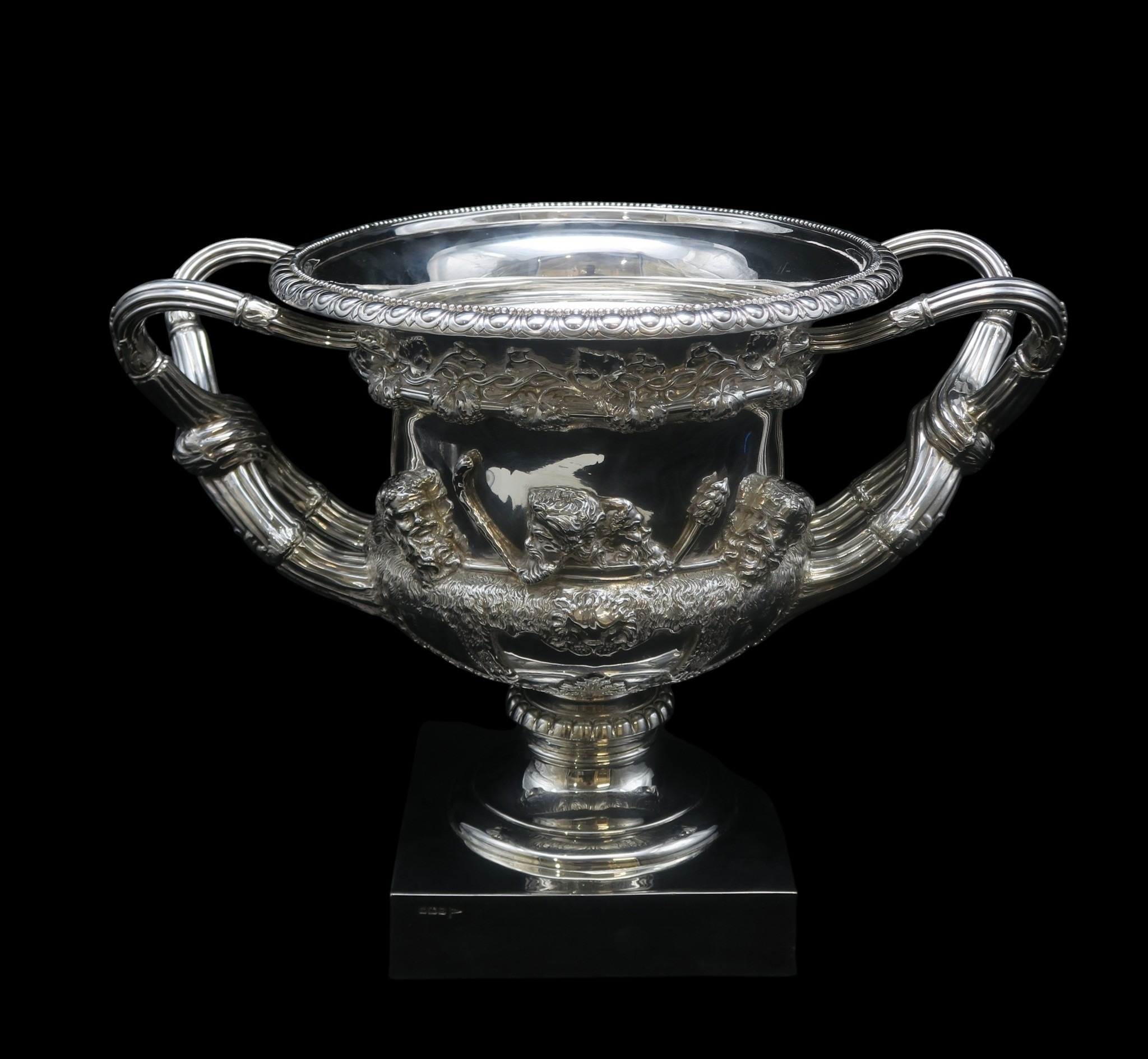
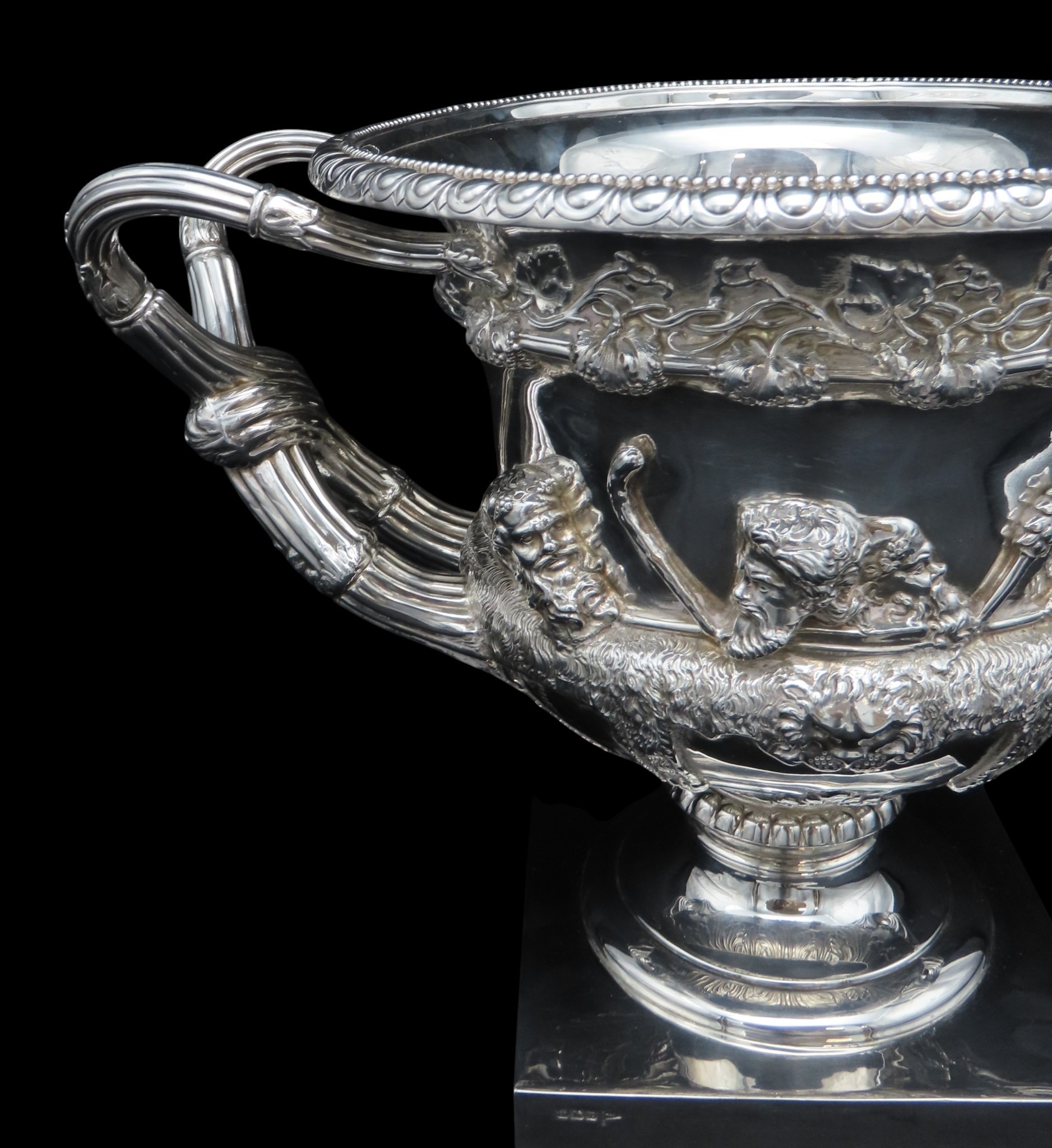
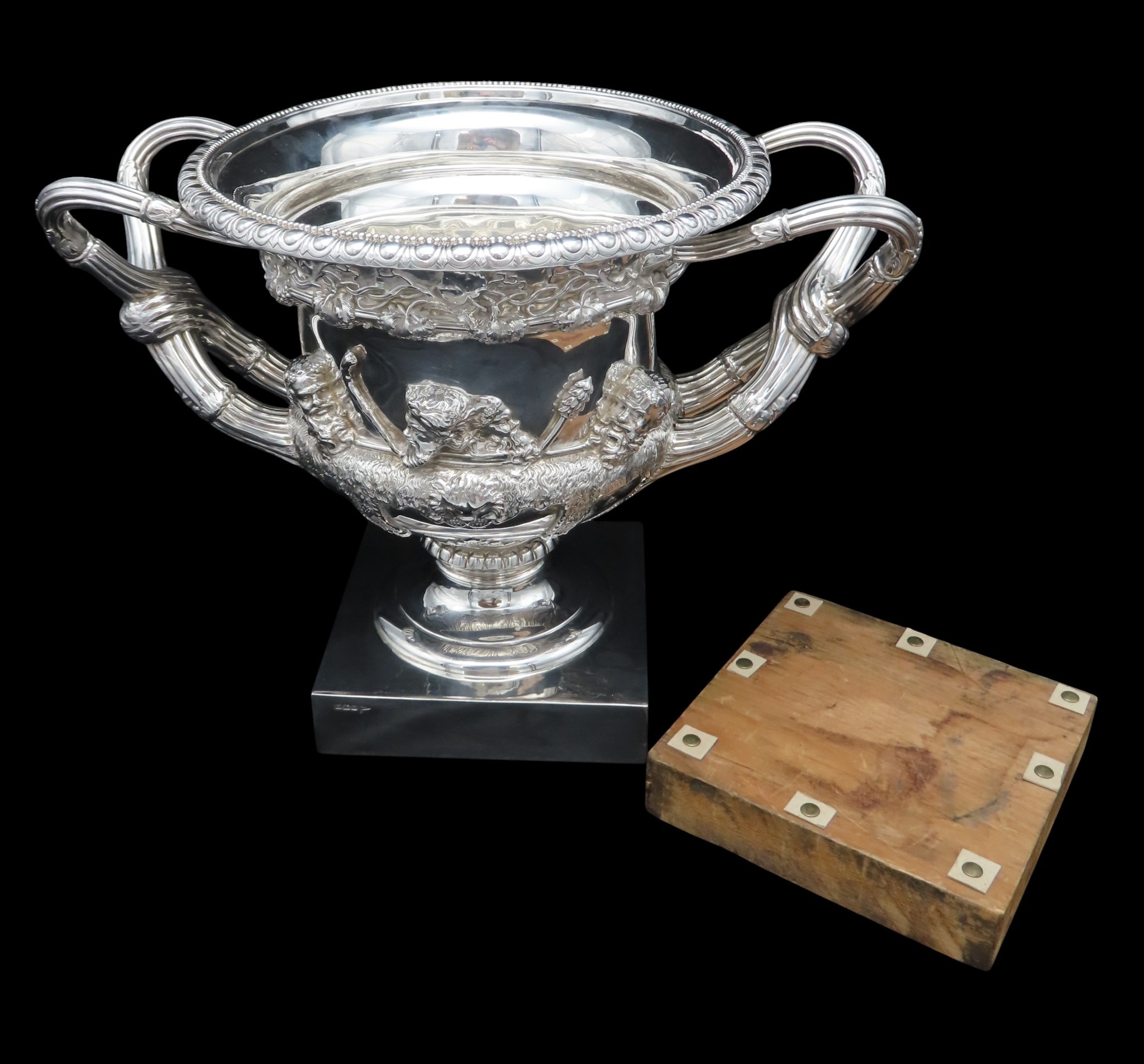
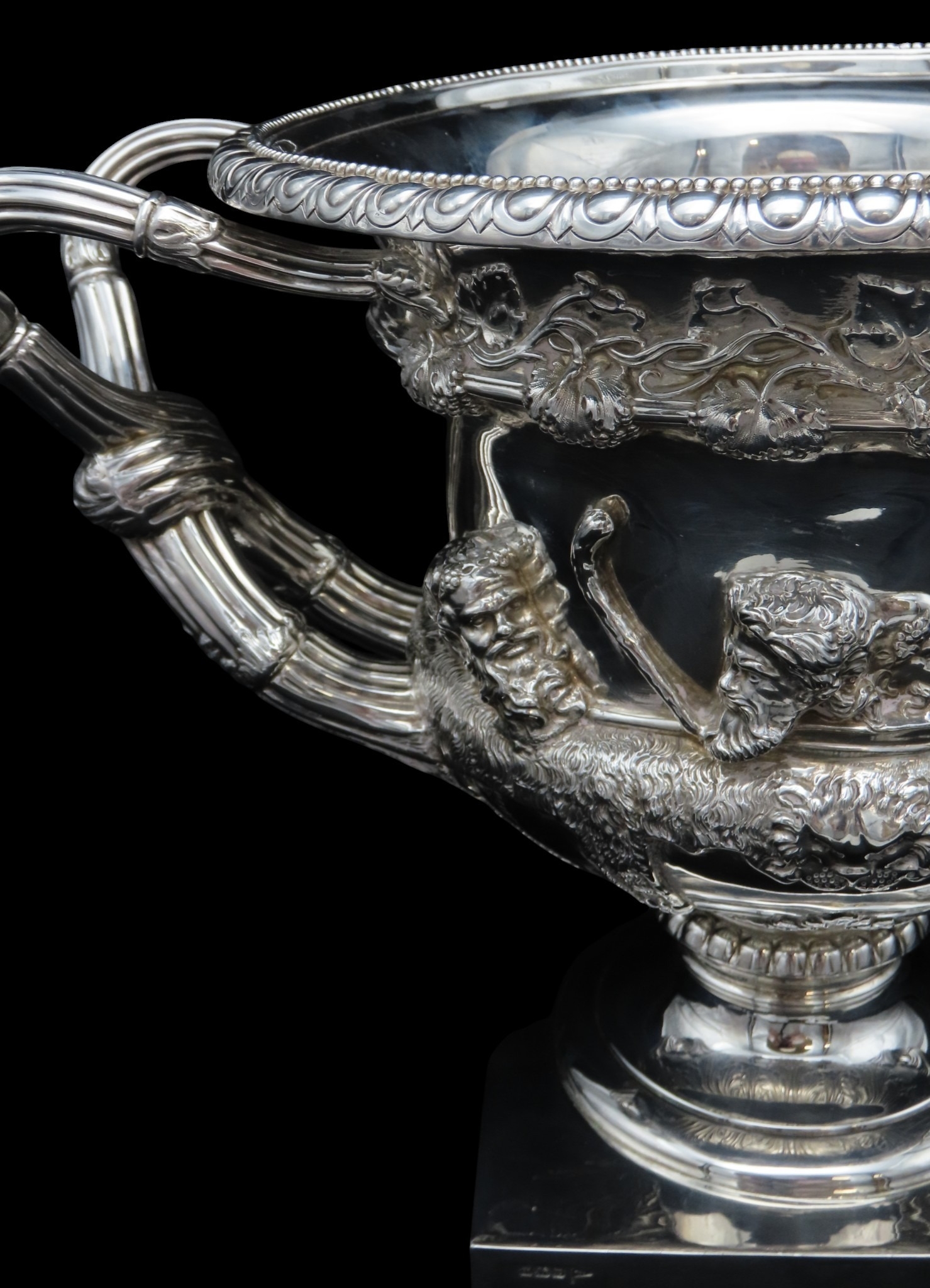
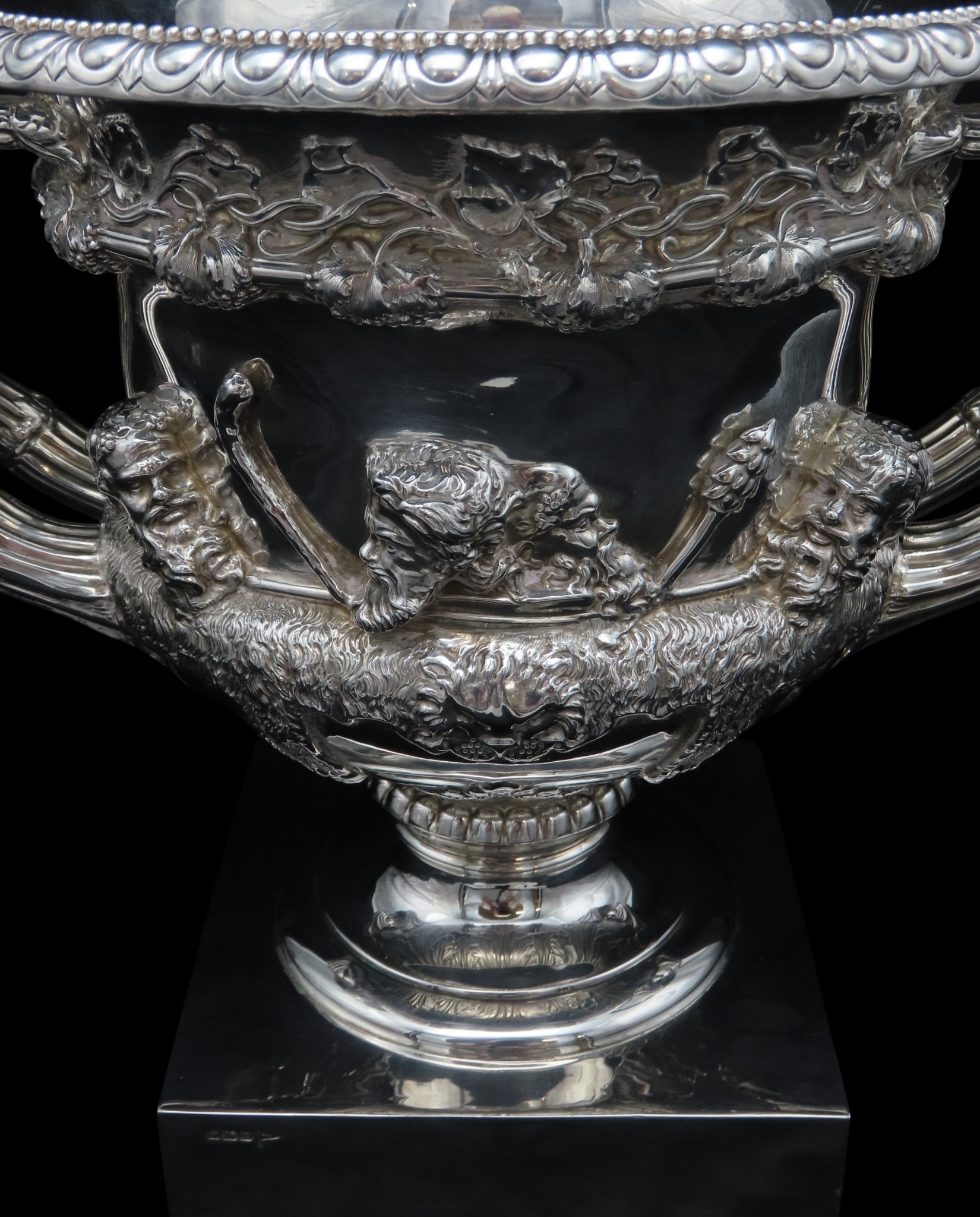
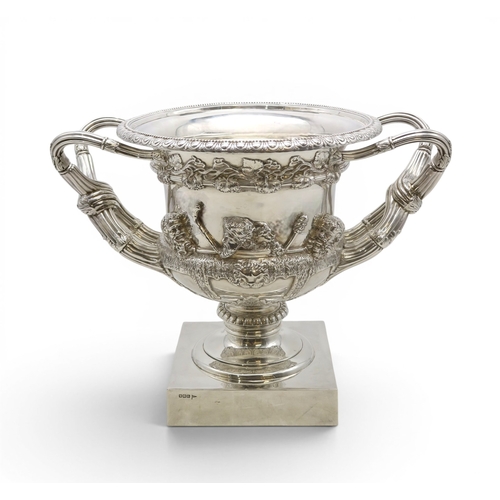
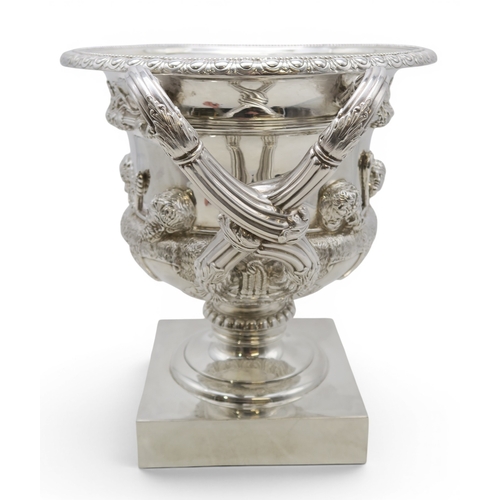
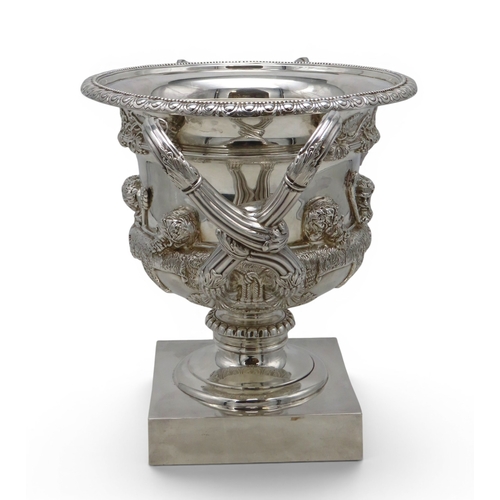
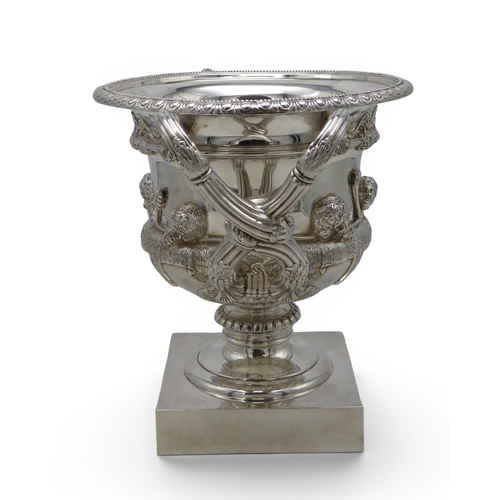
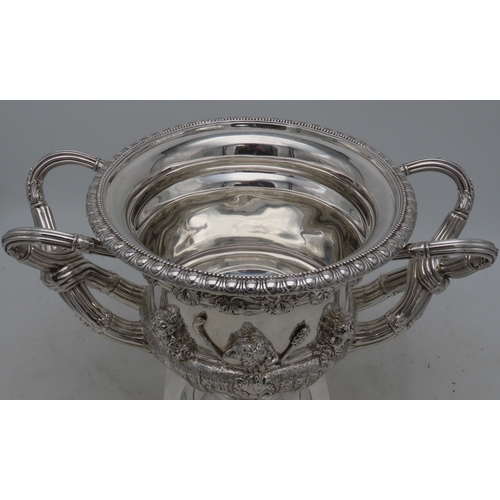
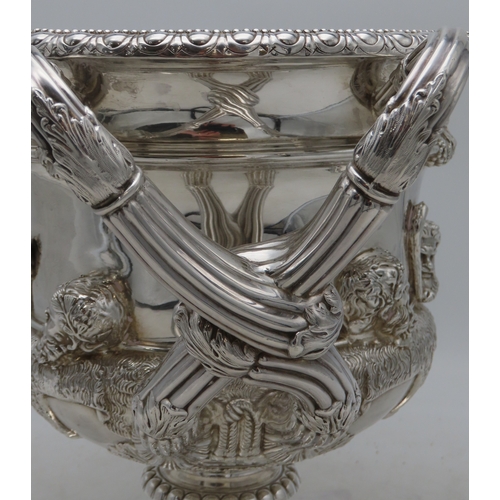
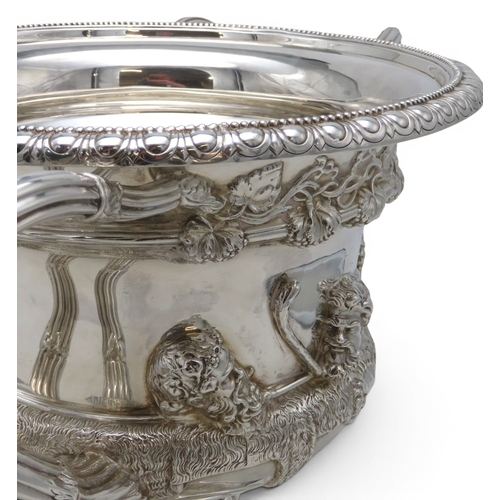
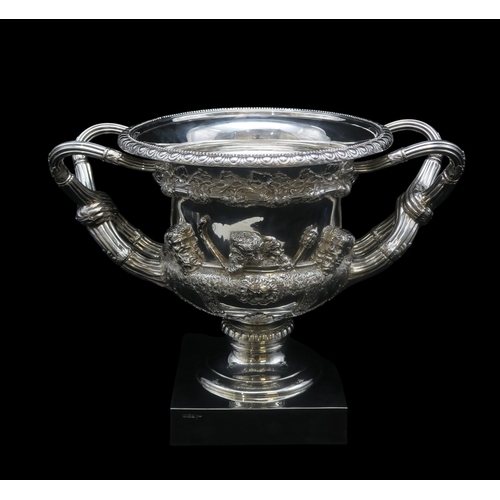
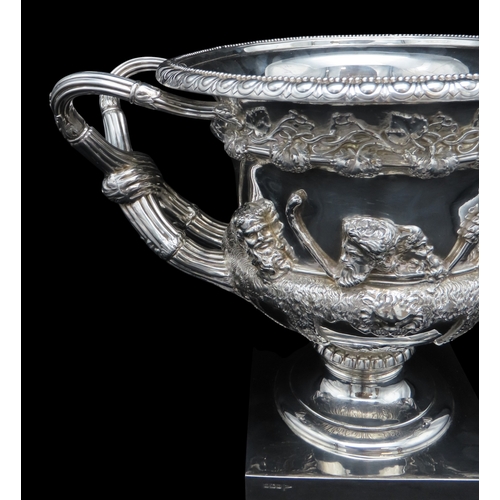
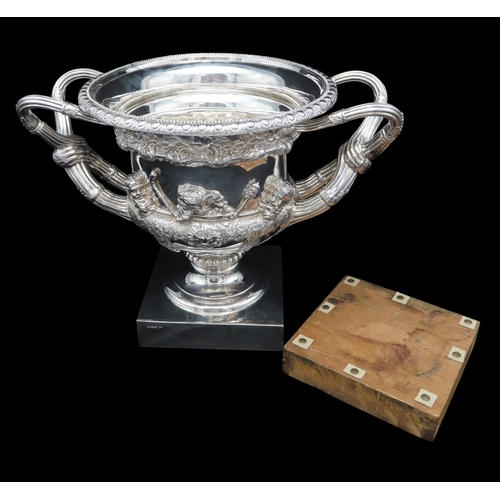
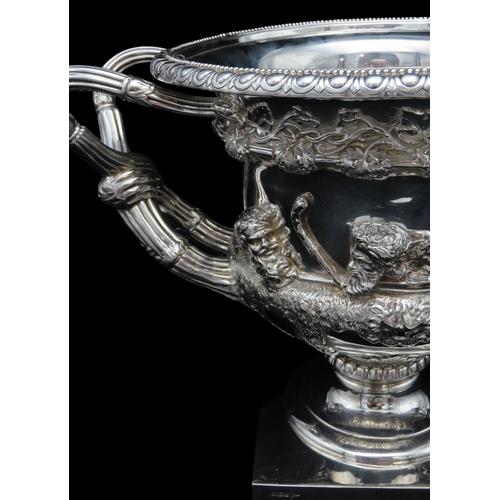
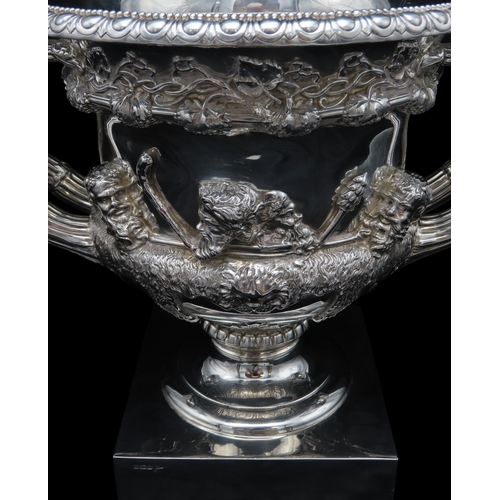
A GEORGE V SILVER MODEL OF THE WARWICK VASE
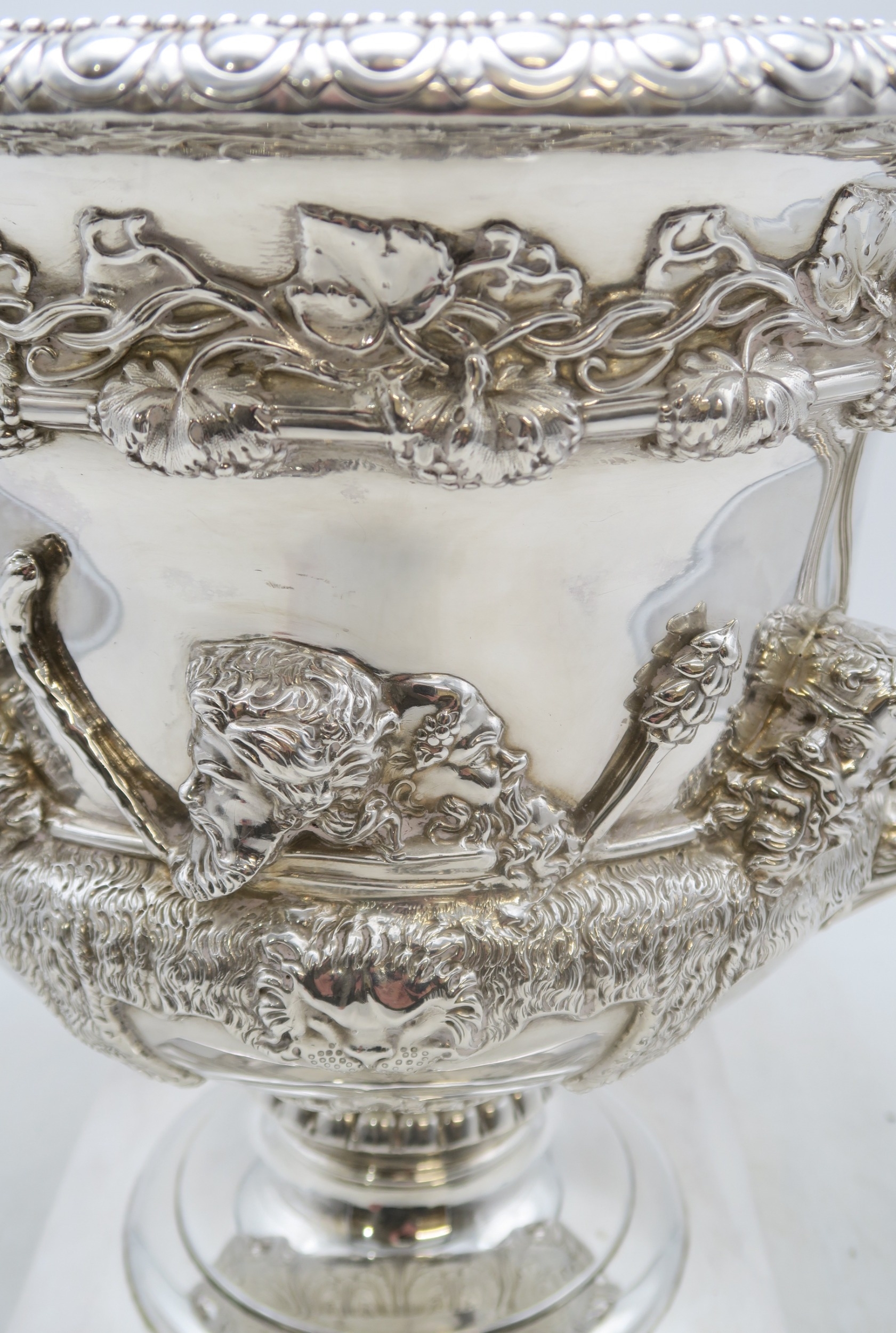
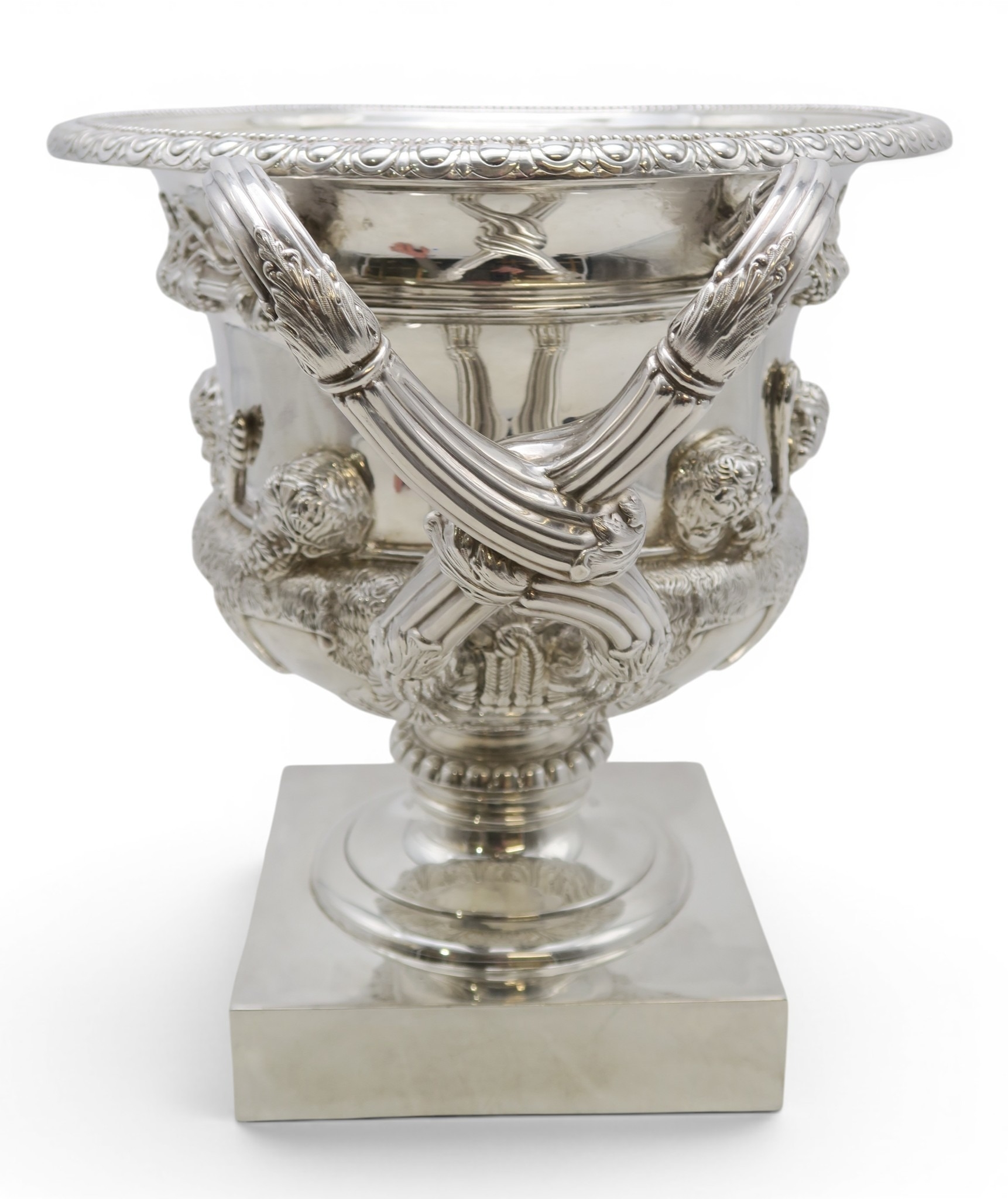
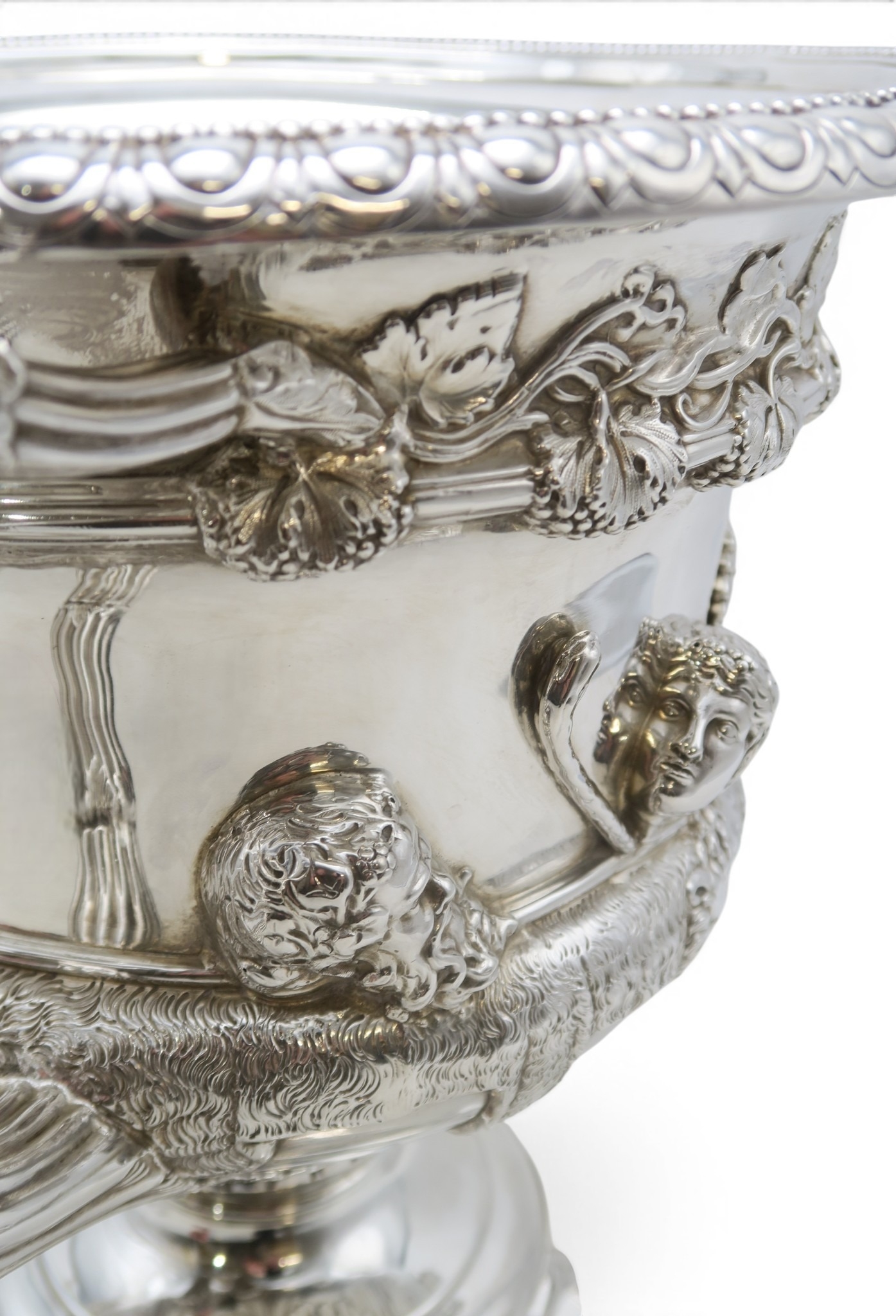
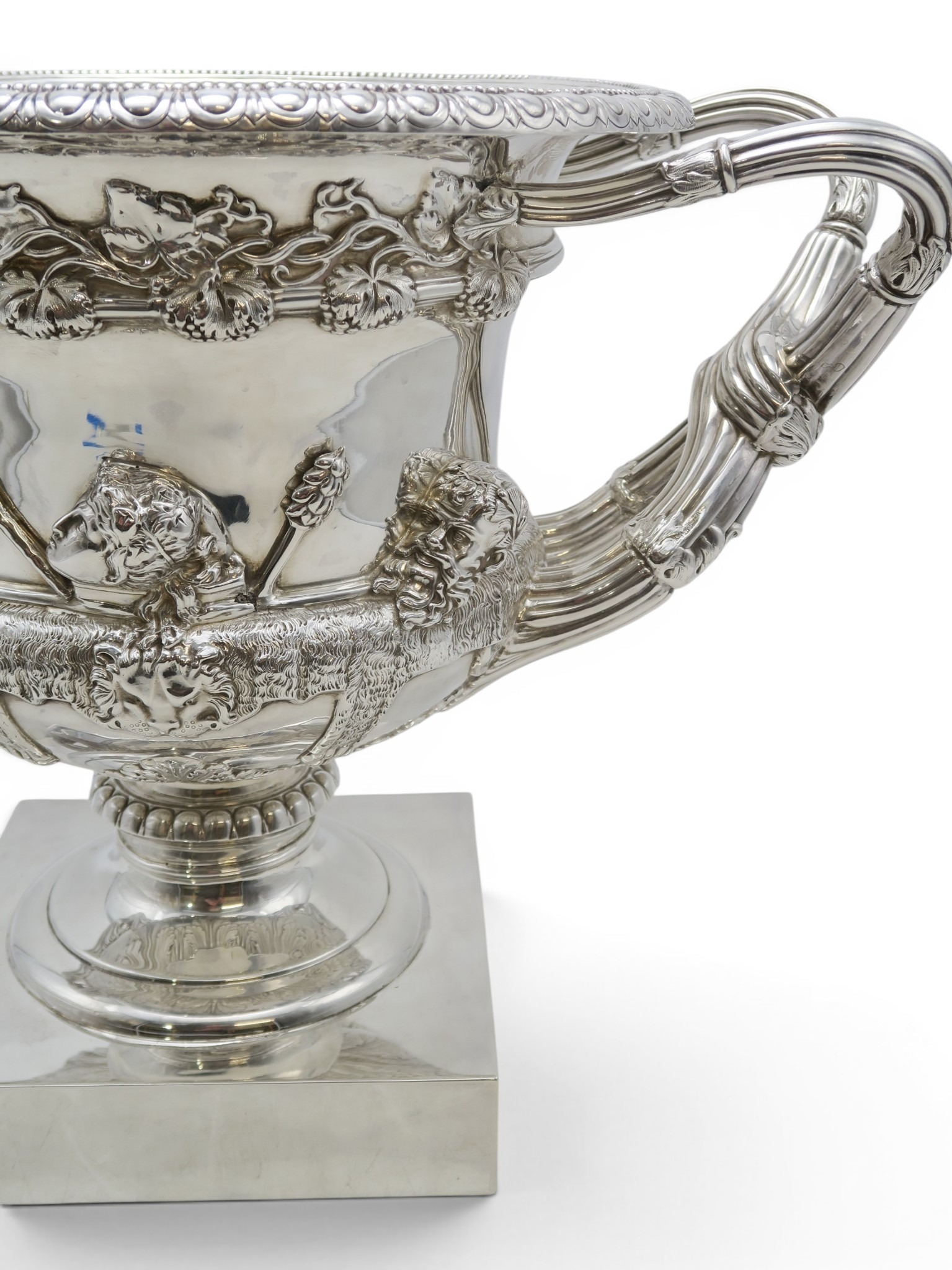
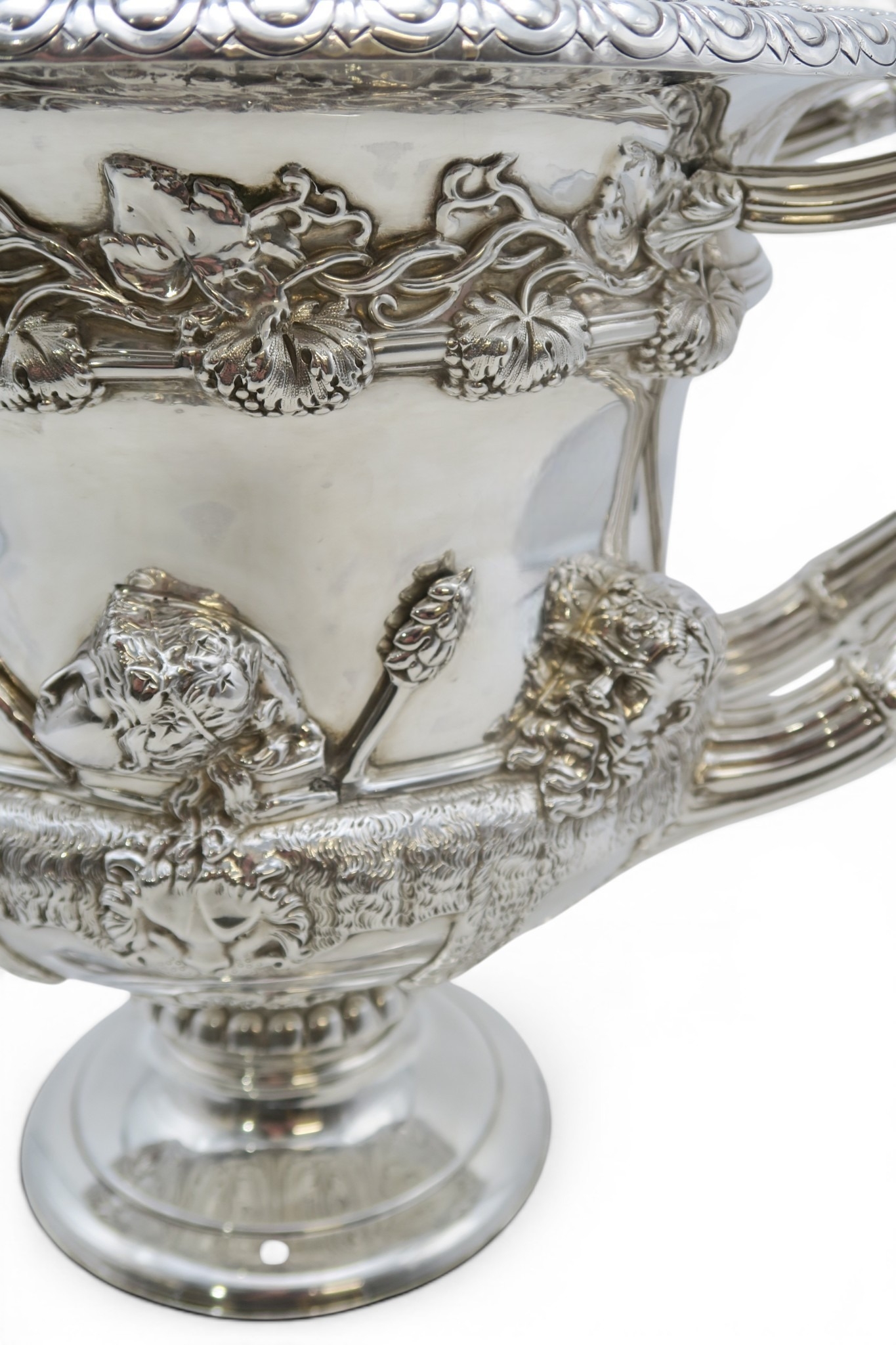
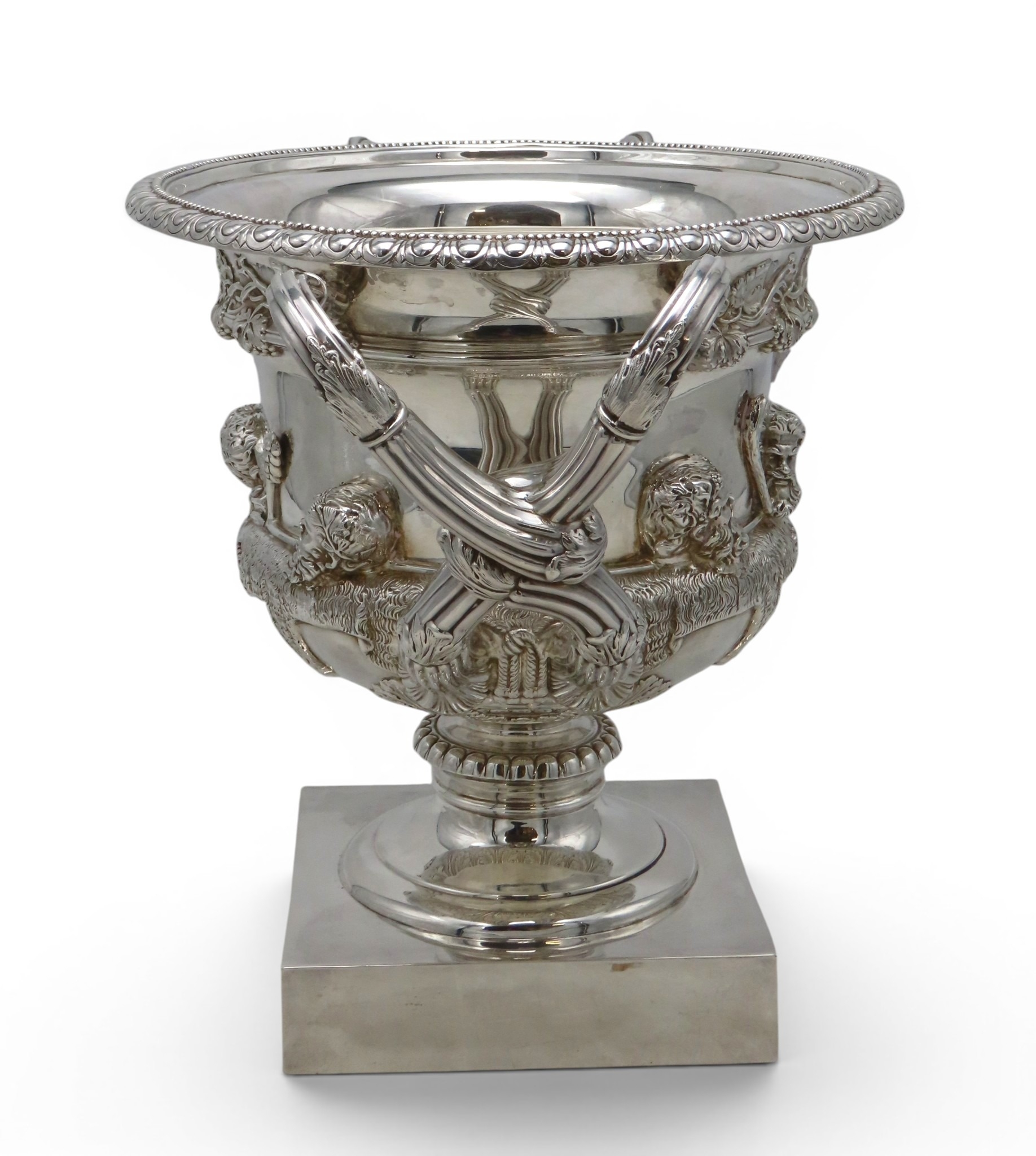
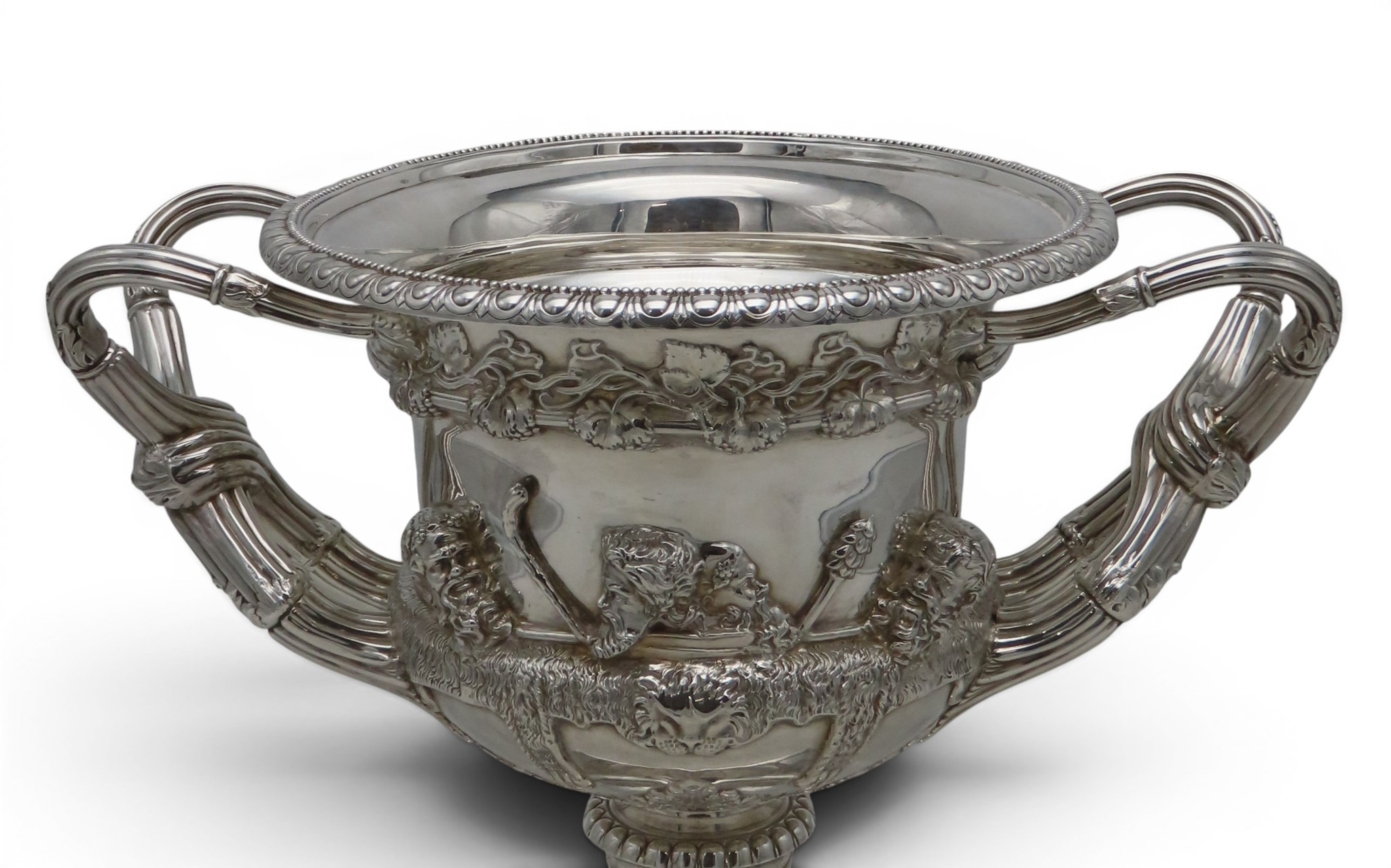
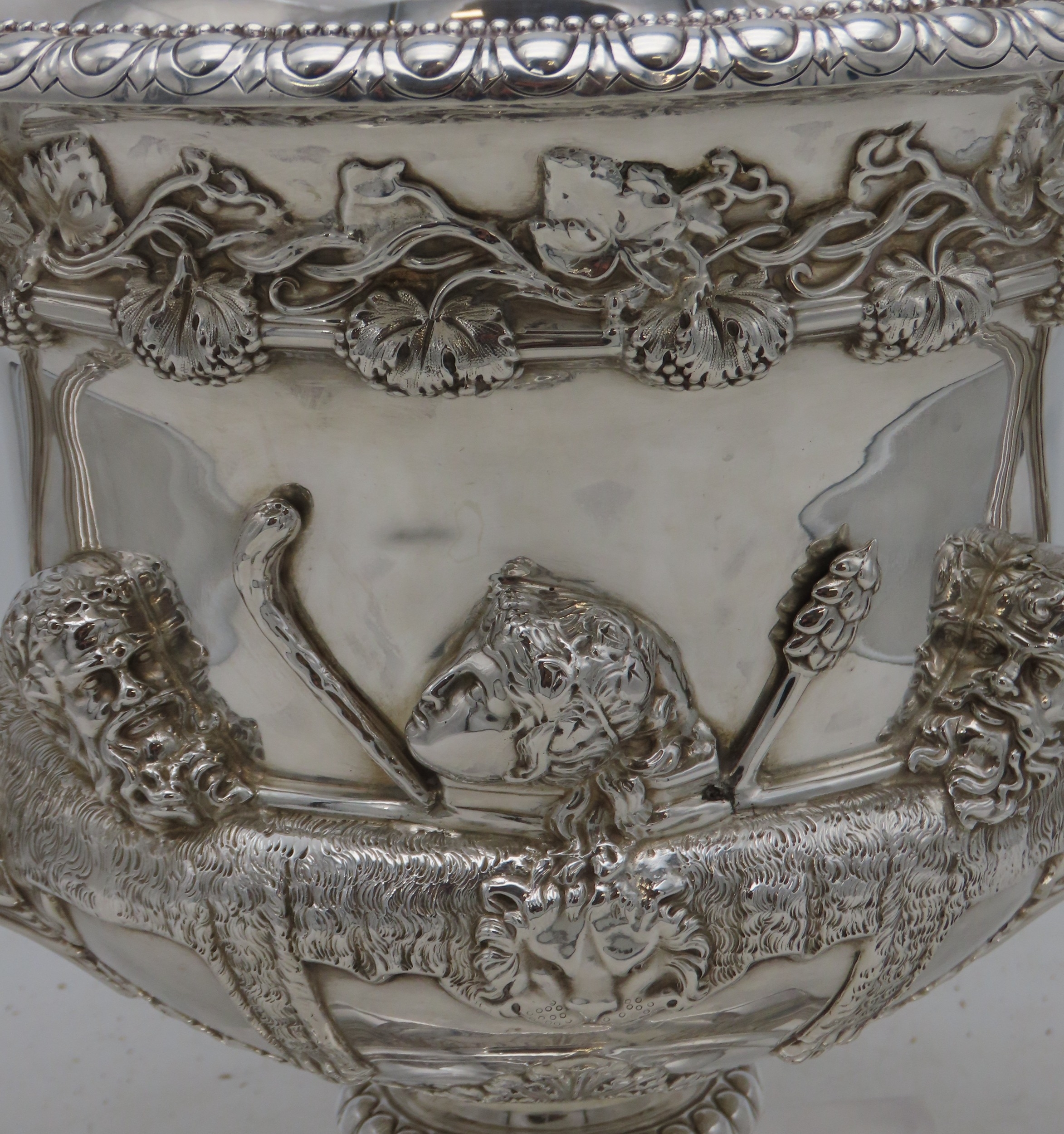
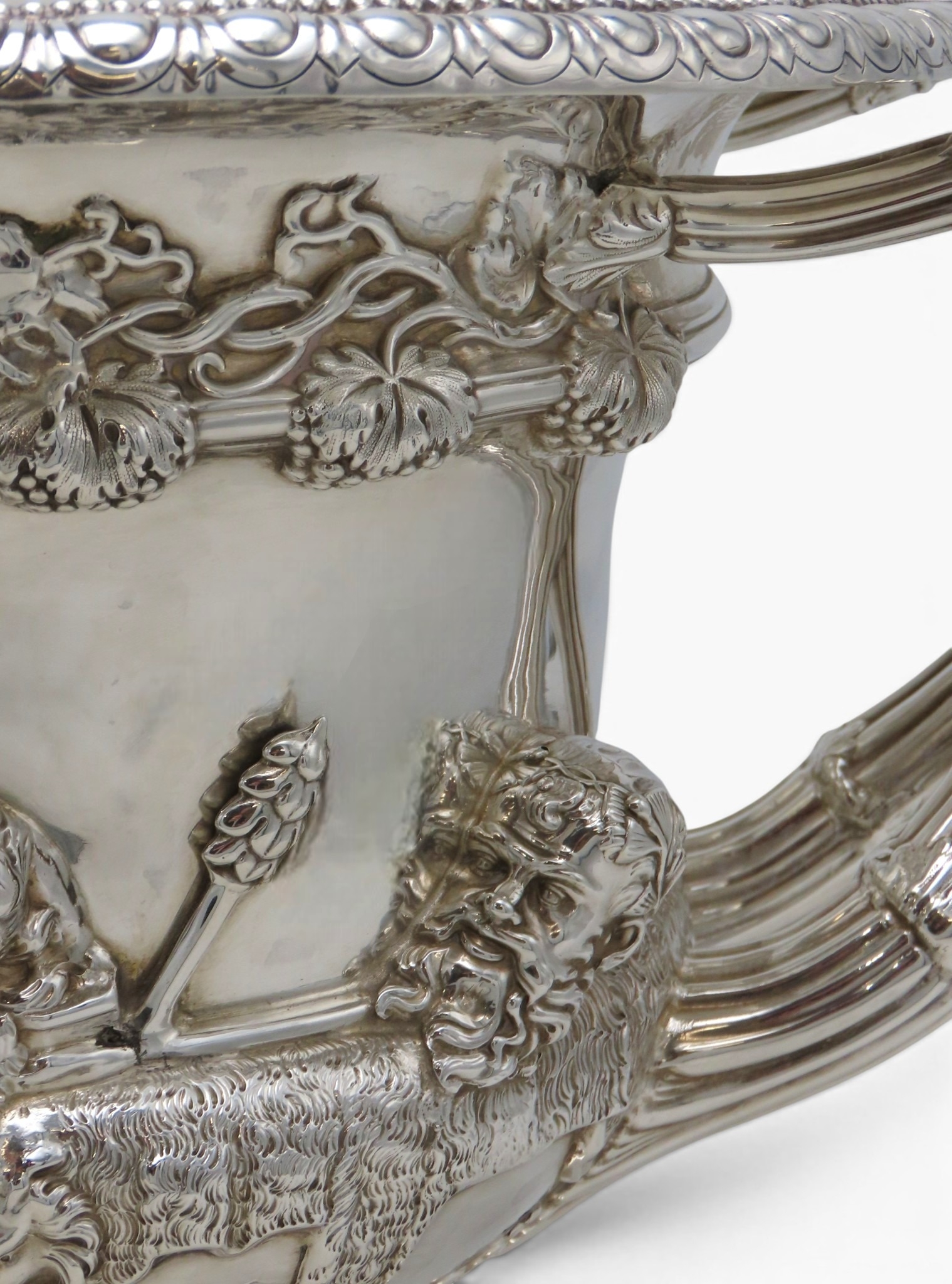
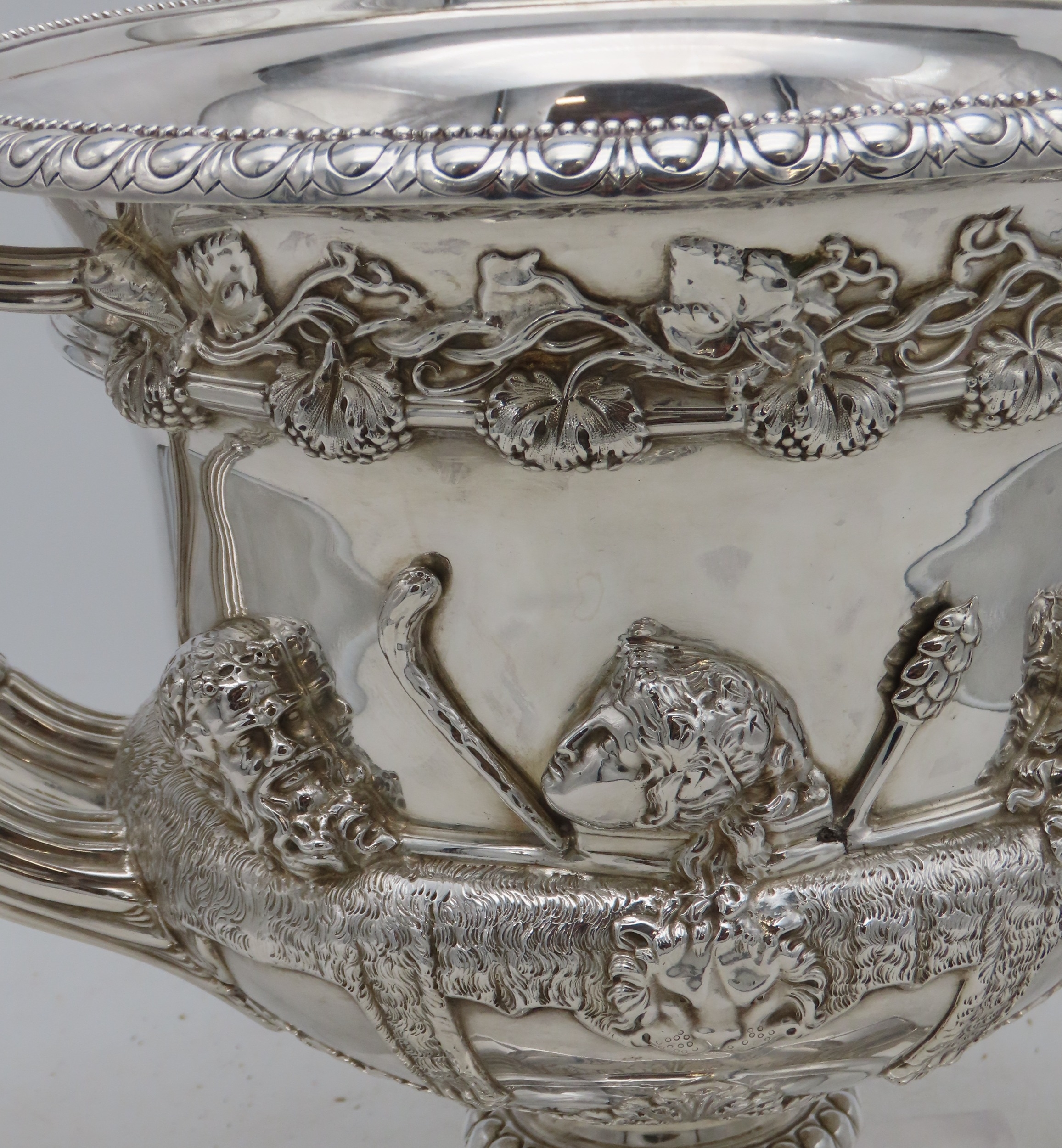
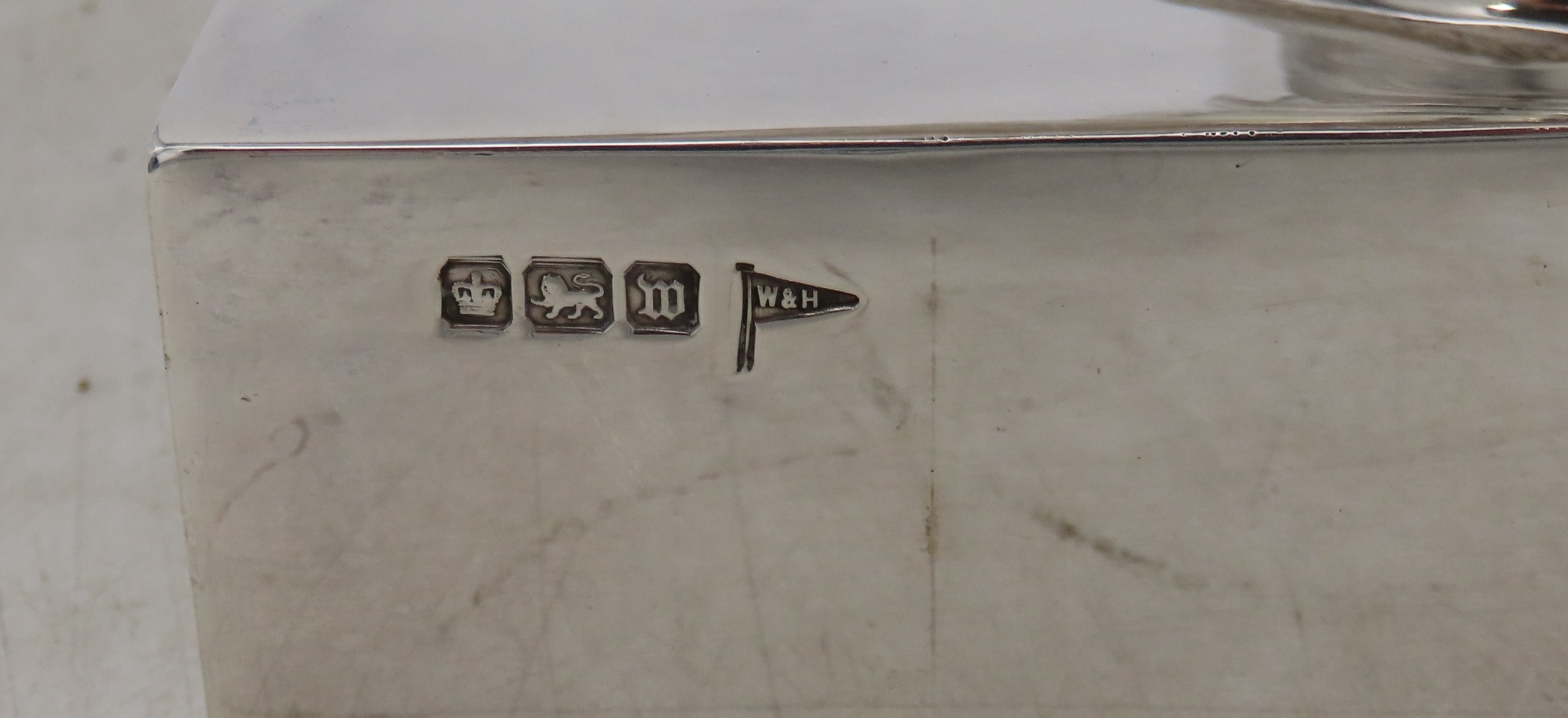
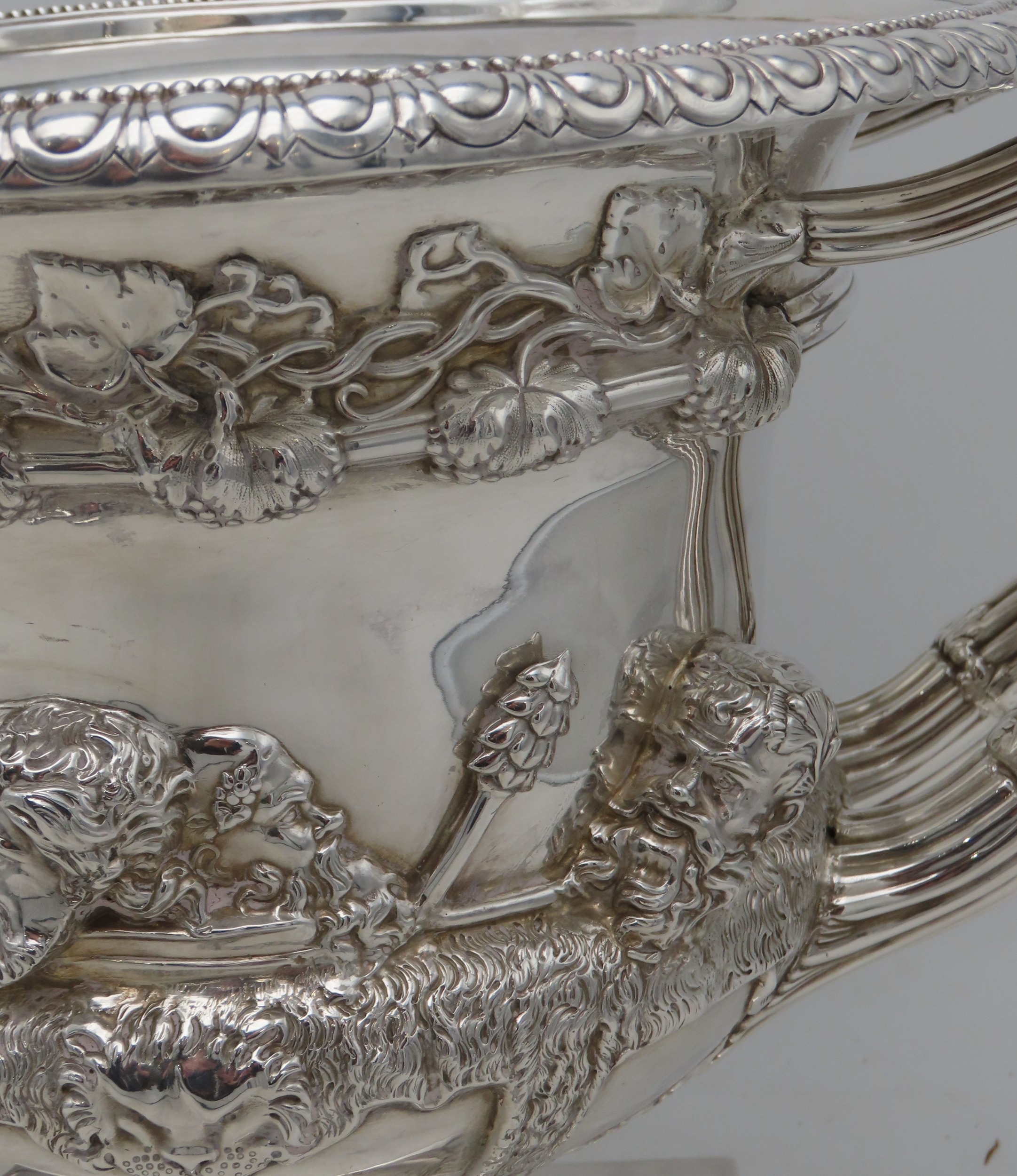
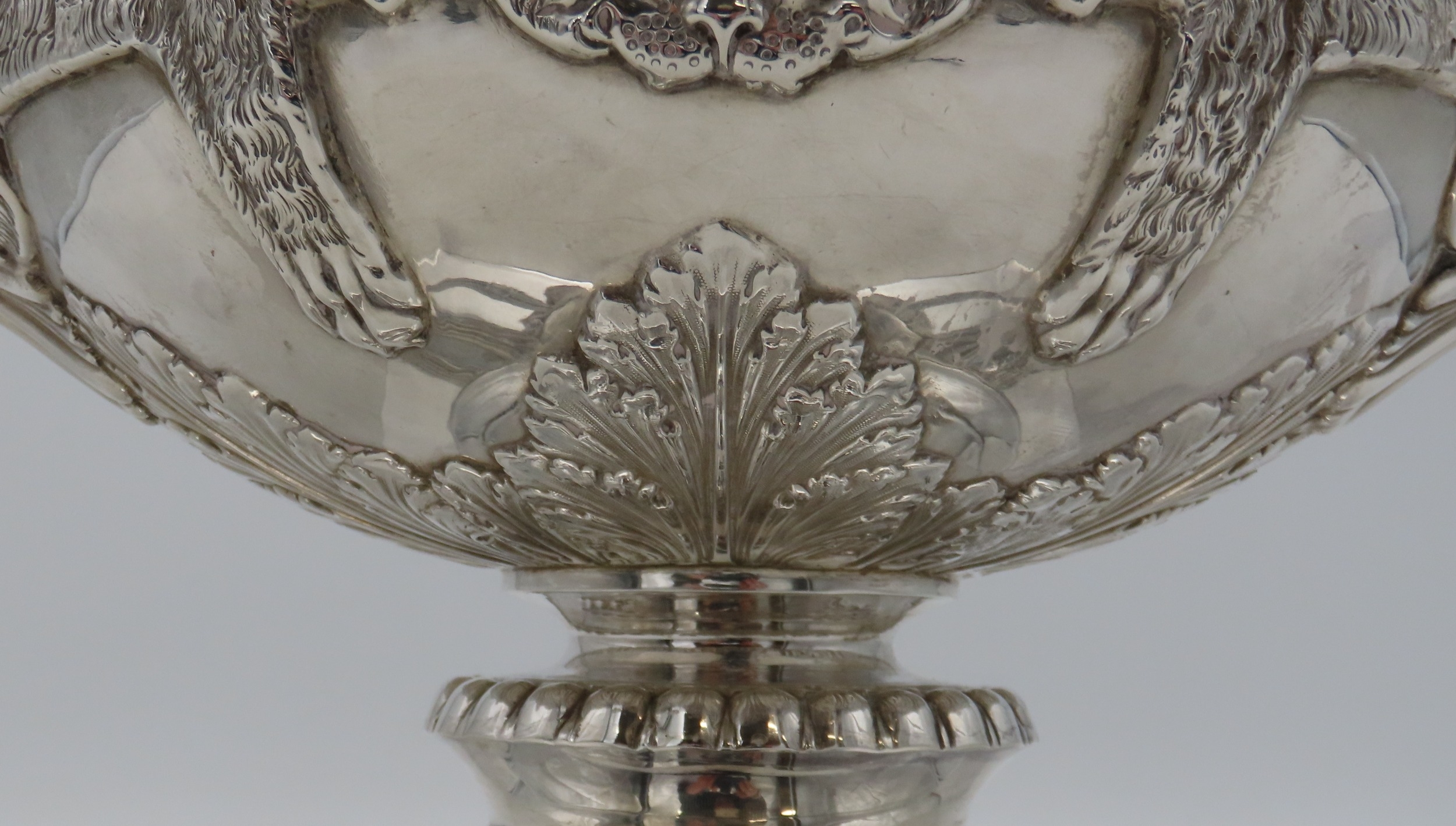
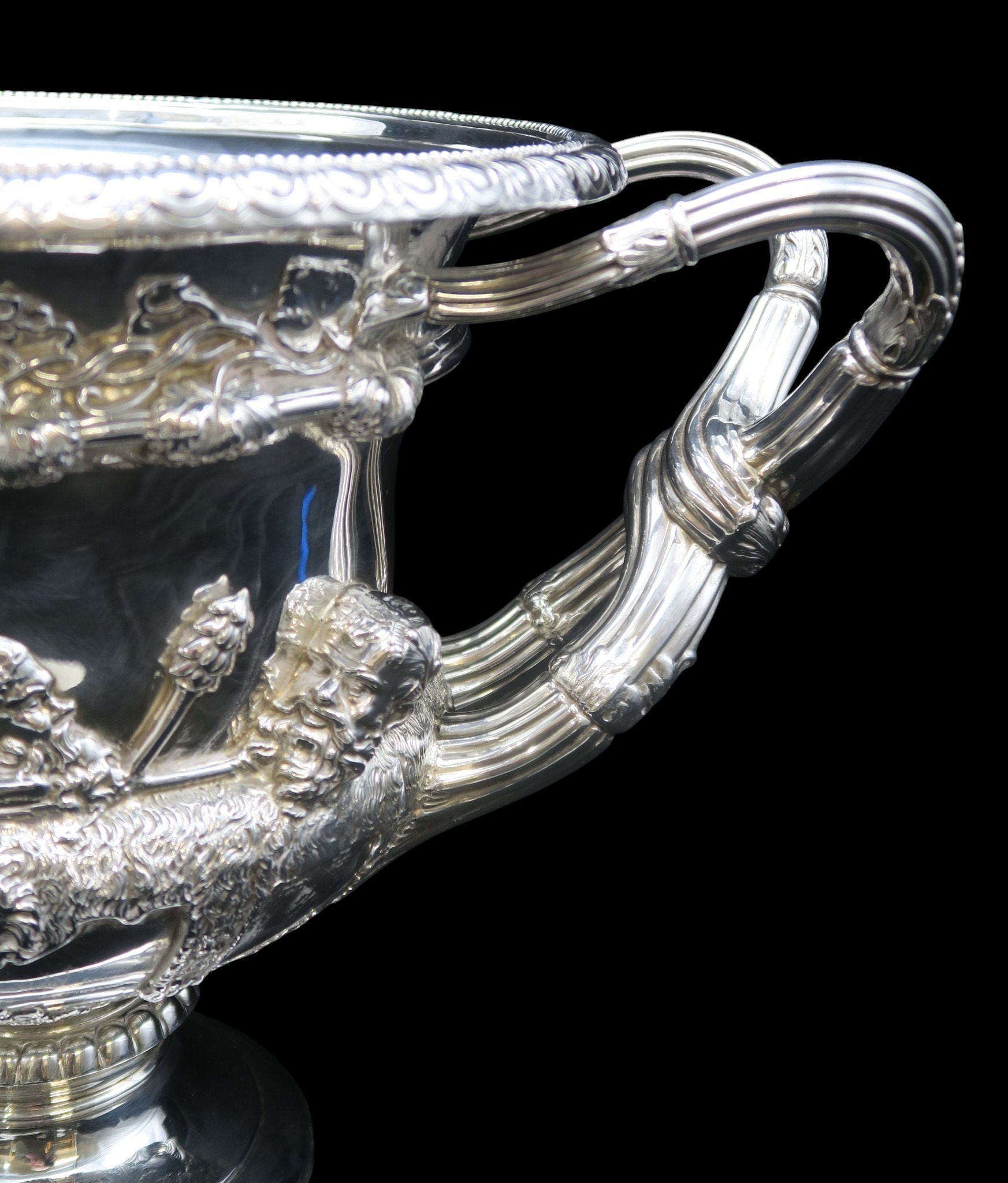
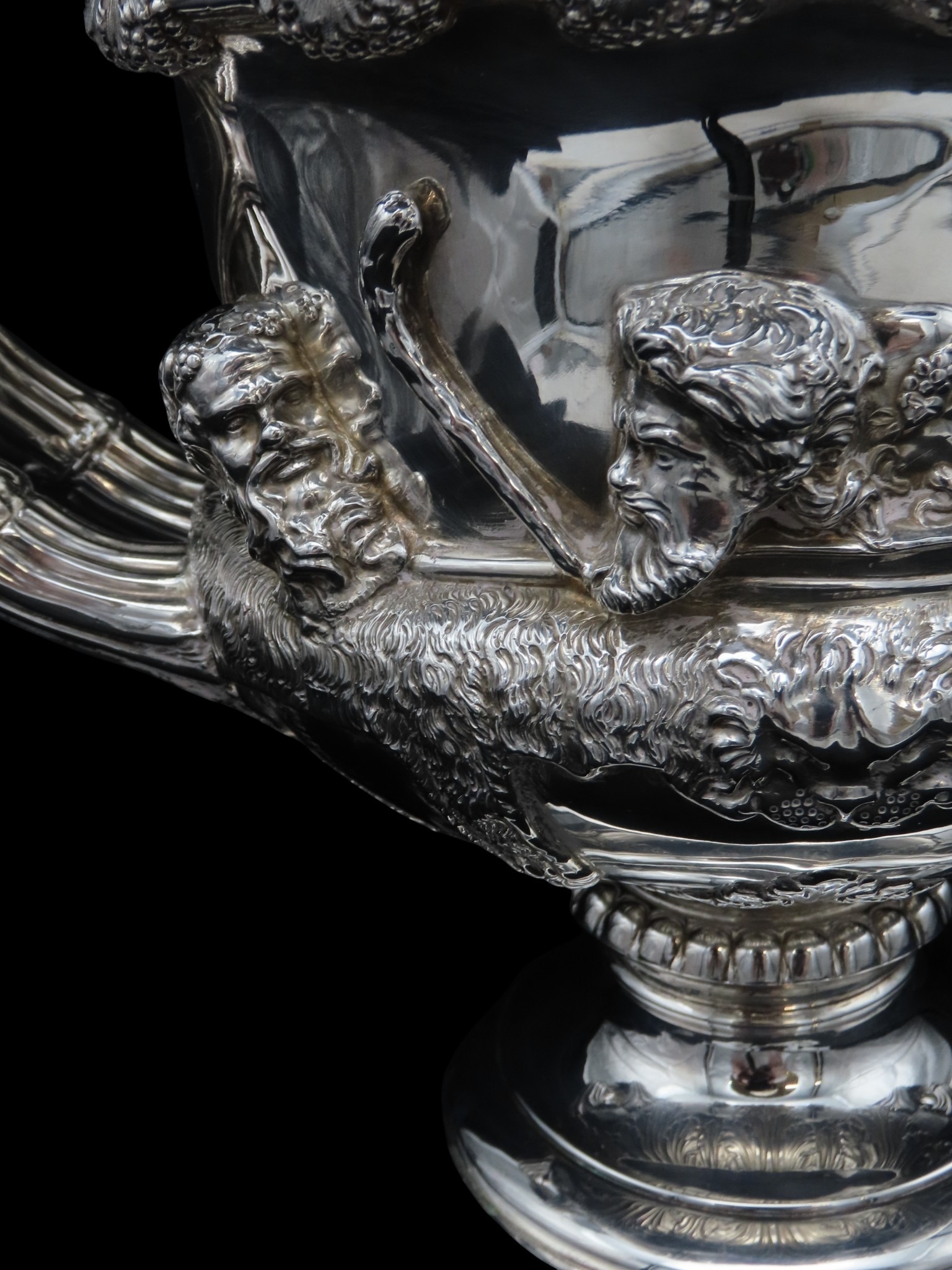
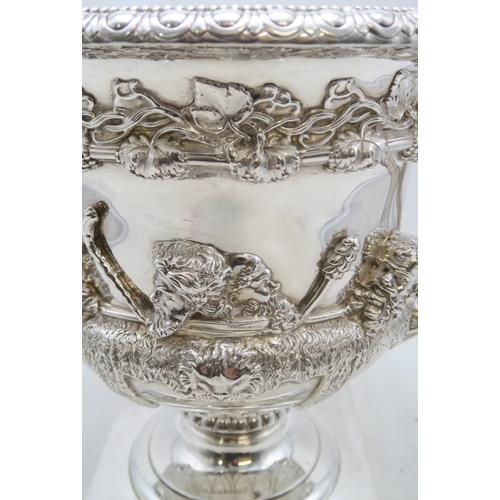
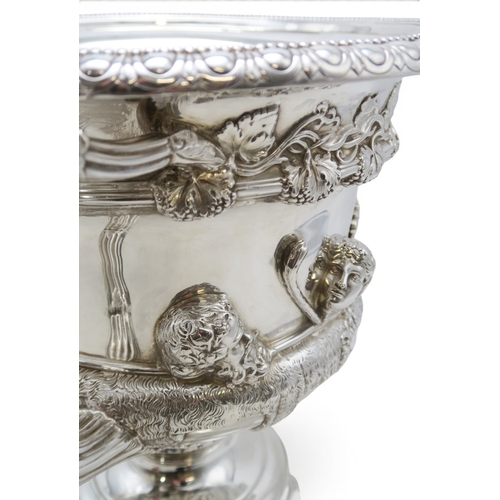
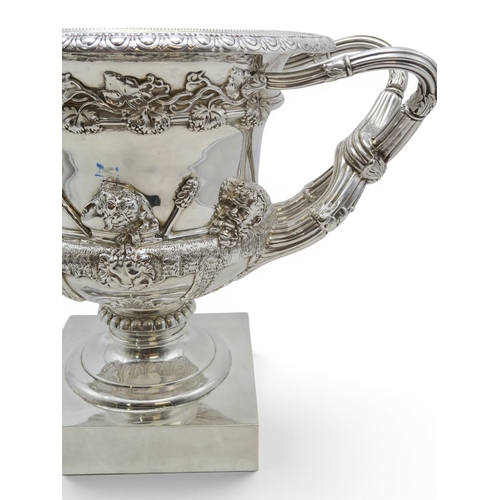
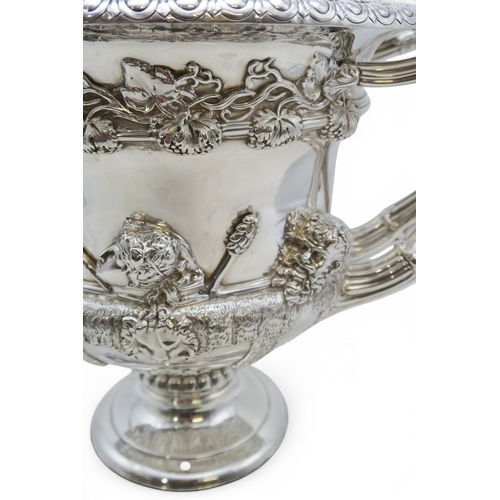
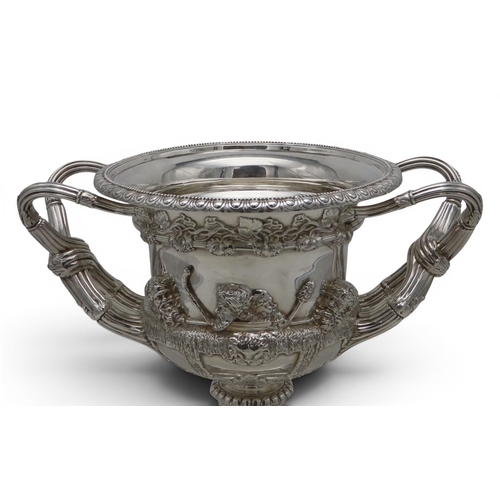
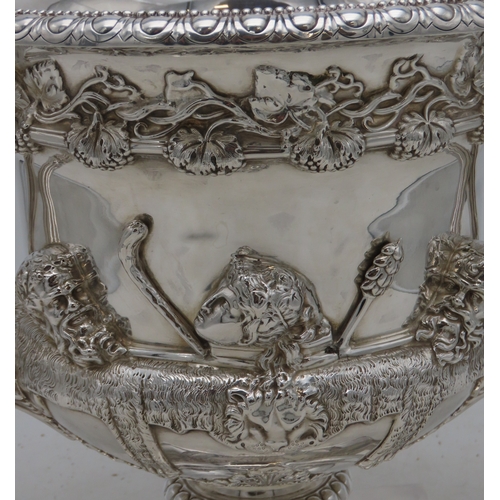
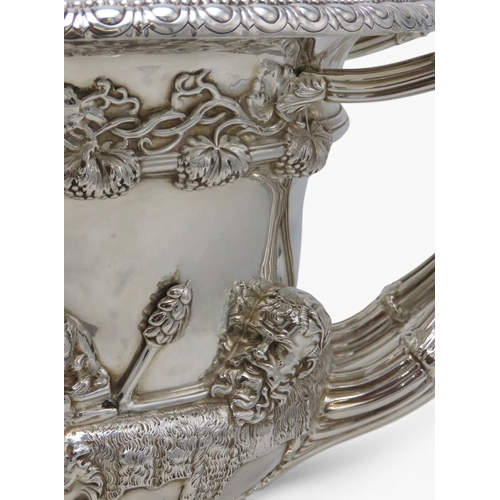
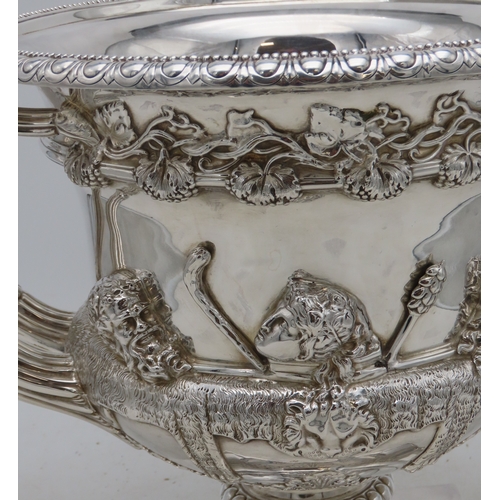
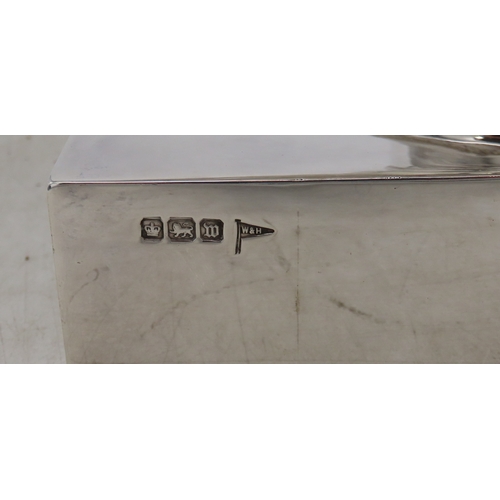
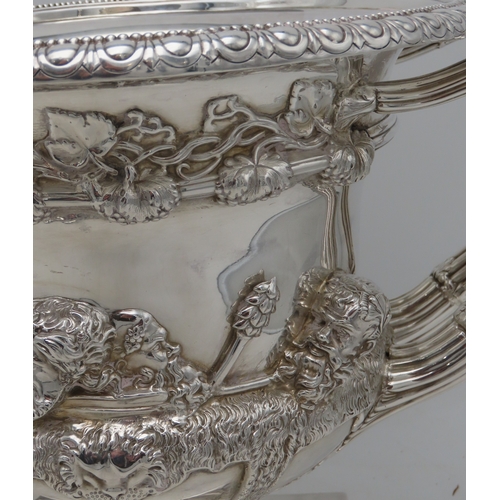
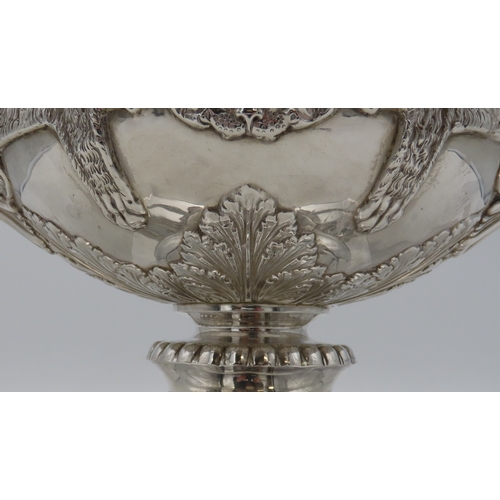
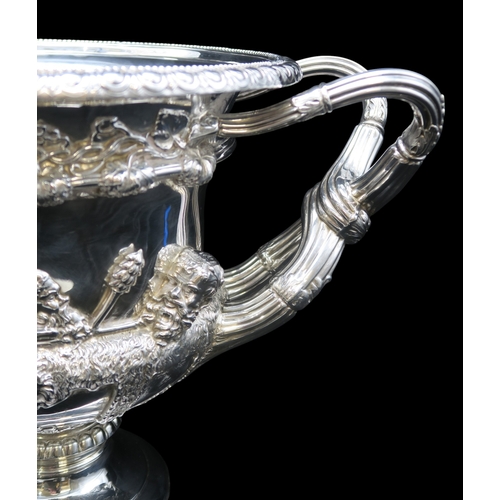
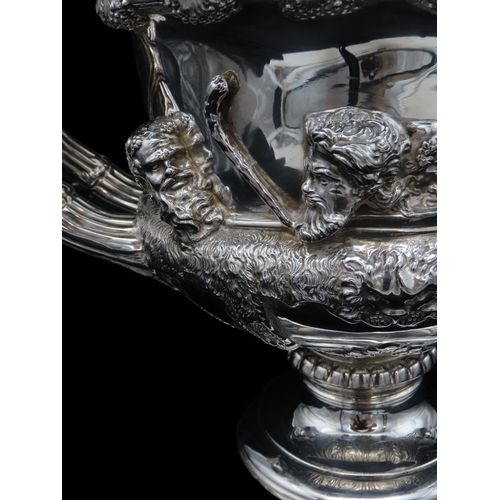
by Walker & Hall, Sheffield 1914, of typical form, the sides cast with bacchic masks and thyrsi, all on a lion pelt-cast ground, with two bifurcated branch handles, with egg and dart and beaded borders above a band of applied fruiting vines, on a square base with a wooden insert, 34cm high, 46cm across the handles, 4,772gms / 153.35oz
The celebrated Warwick Vase is regarded as one of the most iconic survivals of classical antiquity and among the most influential decorative models of the Neo-Classical period. The original marble vase, dating to the 2nd century AD, was discovered circa 1770–71 during excavations at Hadrian’s Villa at Tivoli by the Scottish painter, antiquarian and dealer Gavin Hamilton. Found in fragments within the silt of a marshy pool on the villa grounds, the vase was subsequently restored under the patronage of Sir William Hamilton, British envoy to Naples, with engravings by Giovanni Battista Piranesi helping to secure its fame throughout Europe.
The vase later passed to George Greville, 2nd Earl of Warwick, from whom it derives its name, and was installed at Warwick Castle where it became one of the great attractions of the Grand Tour.
The Earl of Warwick had intended to sell the vase to the British Museum but the sale wasn’t to come to pass. It was sold to the Metropolitan Museum of Art, New York. Before it could leave the country, it was declared to be of national importance and so an export license was denied and the funds were instead raised for it to stay in the country. Richly ornamented with Bacchic masks, vine leaves and scrolling handles, the monumental krater inspired countless 19th-century reproductions in bronze, marble, porcelain and silver, becoming an enduring symbol of classical taste and aristocratic collecting.
Silver interpretations of the Warwick Vase proved especially fashionable during the Regency and Victorian periods, with celebrated silversmiths including Paul Storr and Rundell, Bridge & Rundell producing luxurious versions for elite patrons and royal collections. The form’s association with wine, festivity and classical grandeur made it particularly suited to centrepieces, wine coolers and ornamental presentation vessels.
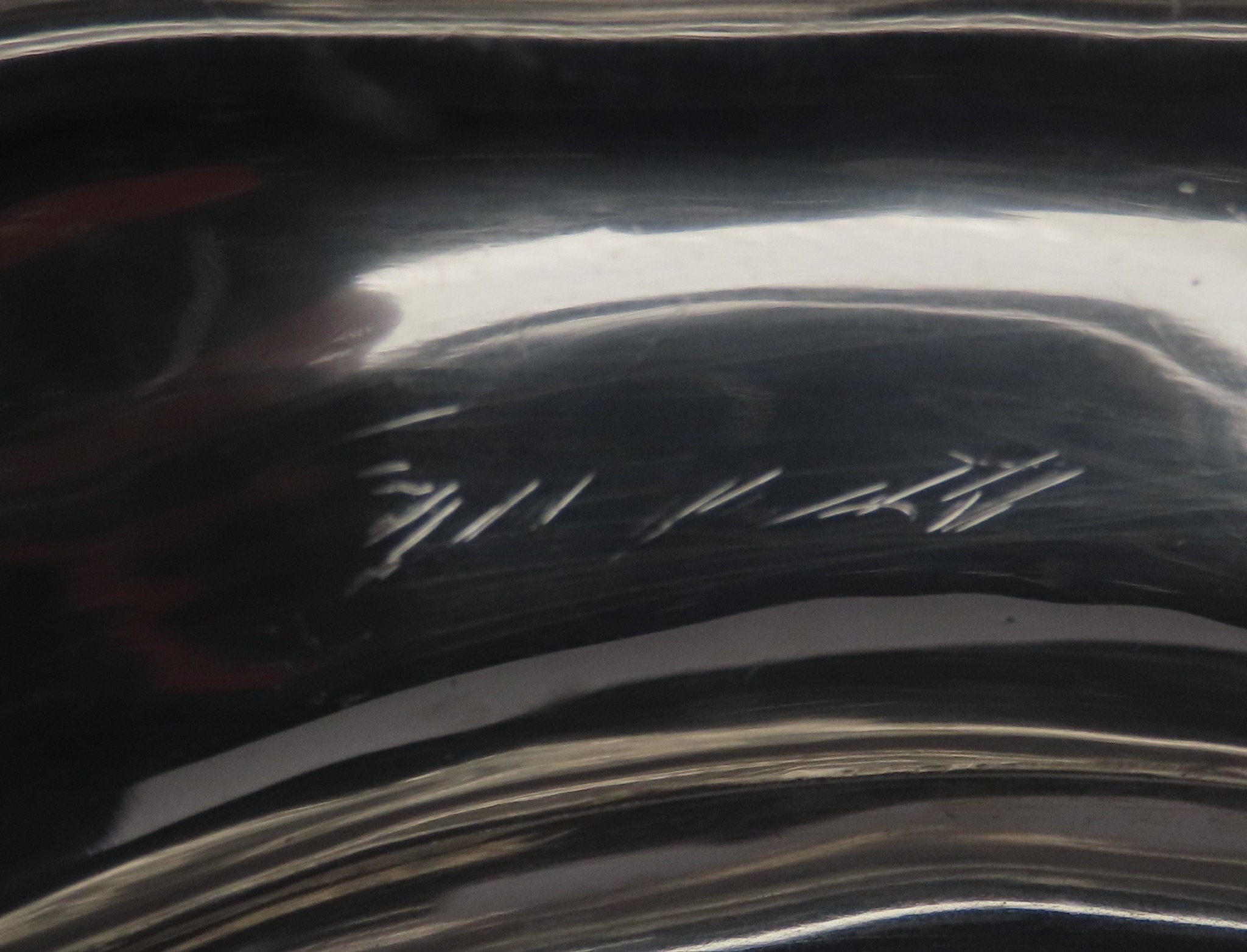
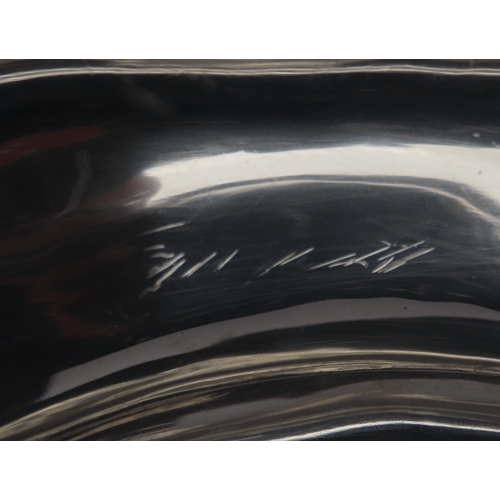
No inscriptions - it is in good condition overall and has barely been used.. Some surface scratches to the interior but otherwise very clean. Some silver polish residue
Fees apply to the hammer price:
Room and Absentee Bids:
6.6% inc VAT*
Online and Autobids:
9.6% inc VAT*